Onshore/Offshore Facilities

Despite significant progress in capturing associated gas for domestic use, Iraq remains the world’s third-largest gas-flaring country as it aims for higher oil and gas production targets.

The 2026 Upstream Scale Guidelines establish a common workflow for field measurements, scale modeling, and risk assessment to support more consistent operational decisions.

Shell has reached FID on LNG Canada Phase 2, a major expansion that will double the Kitimat facility’s LNG export capacity to 28 mtpa and strengthen long-term supply to growing Asian markets.
-
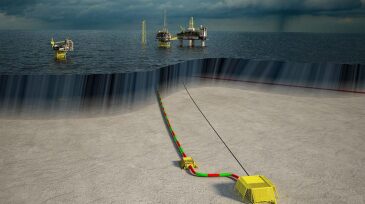
 Decommissioning experts in the UK examine the advantages and disadvantages of removing offshore installations vs. leaving them in place, discussing cost efficiencies, environmental factors, and long-term risks.
 -
The overarching theme of work published during the past year relating to production and facilities is performance and productivity improvement—doing more with less at a lower cost.
-
The digitalization of oil and gas facilities is becoming a new technical arena. Effective solutions can be used to convert data into information and knowledge, which can then be used to improve maintenance operations.
-
The complete paper holds that traditional facilities-planning methodologies, heavily based on design-basis documents and biased toward the most-conservative conditions, fail to recognize the entirety of operational conditions throughout the oilfield life cycle.
-
Obstacles remain to keeping offshore development competitive with its onshore counterpart. Can the industry advance technology at a pace where the subsea segment will see a resurgence?
-
Southwest Research Institute has developed a leak detection system to autonomously monitor pipelines for hazardous chemical spills. R&D Magazine recently recognized the system as one of the 100 most significant innovations of 2017.
-
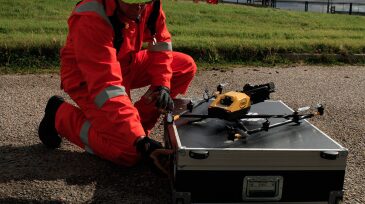
Intel and Cyberhawk released a case study outlining the successful inspection of a gas terminal near the coast of Scotland using commercially available drone technology.
-
Shell reported it has not observed any signs of oil on the water associated with a fire on the Enchilada platform, located in the US Gulf of Mexico.
-
GATE Energy is the most recent contract awardee for Noble Energy’s Leviathan project offshore Israel. It will provide the commissioning of the production platform for the megaproject.
-
Total is making an LNG push by spending up to $2 billion for assets belonging to fellow French firm Engie.