Onshore/Offshore Facilities
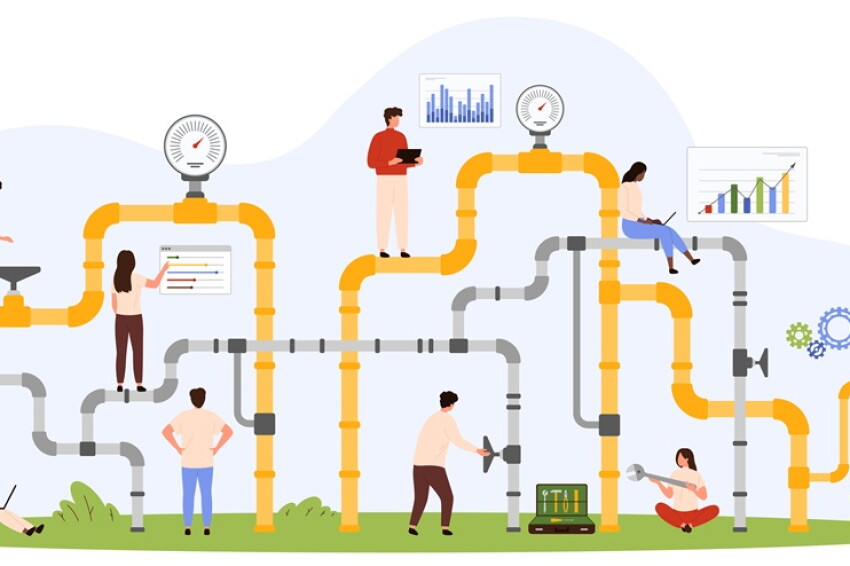
A credible custody-transfer record depends on far more than the accuracy of a single meter. It is the product of an integrated measurement chain. While meter performance supports measurement-system integrity, commercial confidence also depends on traceability, governance, and authorization.

Despite significant progress in capturing associated gas for domestic use, Iraq remains the world’s third-largest gas-flaring country as it aims for higher oil and gas production targets.

The 2026 Upstream Scale Guidelines establish a common workflow for field measurements, scale modeling, and risk assessment to support more consistent operational decisions.
-
 Riser margins were abandoned when fluid columns in risers became too long with increasing water depth accessed when floating drilling units with subsea blowout preventers (BOPs) moved to deep water.
 -
Kuwait Oil Company started free gas production from its Jurassic sour-gas field in May 2008 with the commissioning of Early Production Facility (EPF) 50.
-
Monetizing offshore gas by compressing and shipping it in floating compressed-natural-gas (FCNG) carriers is simpler and, in most cases, less expensive than liquefying and shipping it in floating liquefied-natural-gas (FLNG) carriers.
-
During natural gas liquefaction, CO2 must be removed to prevent icing and plugging in the system. The CO2-removal system may be the most important part of the gas-treatment system.
-
A methodology is proposed for design of subsea flowlines and risers coupled with a subsea high-integrity pressure protection system (HIPPS) for fields with high shut-in tubing pressure (SITP).
-
On the 201st anniversary of the founding of the first commercial gas operation, the Gas, Light and Coke Company (later British Gas), the future for natural gas has never looked better.
-
This paper discusses the available methodologies for remediation of a pipeline affected by sand and presents examples where the discussed methodologies have been applied.
-
Industry has overcome the technical challenges with decommissioning in shallow water. But as deepwater structures require removal, a whole new set of decommissioning challenges will require new solutions. This article highlights some of these challenges.
-
This paper presents a methodology to estimate the probability of failure of every individual corrosion defect and the residual likelihood of failure of an overall corroded pipeline segment after selected repairs, using structural probabilistic analysis.
-
Increasing gas demand and the requirement for short-term to medium-term import solutions have led to rapid growth in the floating regasification sector in recent years.