Onshore/Offshore Facilities

The 2026 Upstream Scale Guidelines establish a common workflow for field measurements, scale modeling, and risk assessment to support more consistent operational decisions.

Shell has reached FID on LNG Canada Phase 2, a major expansion that will double the Kitimat facility’s LNG export capacity to 28 mtpa and strengthen long-term supply to growing Asian markets.

The long-term outlook analysis says a potential shift toward new construction could push 2026 production 3% above 2025 levels.
-
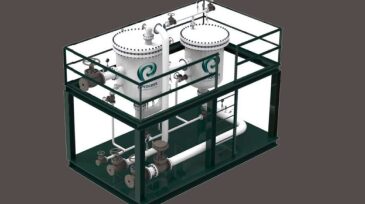
 An operator in the western Gulf of Thailand retrofit two partial-processing water-management systems on mobile-offshore-production-unit platforms for bulk removal and treatment of produced water. Water debottlenecking increased oil production by 80% and reduced the infield transfer volume by 62%. Th
 -
With $102 billion of decommissioning-related expenditure forecast to 2040 in Western Europe, opportunities are ripe for the supply chain to compete with innovative and cost-effective solutions for the E&P operators.
-
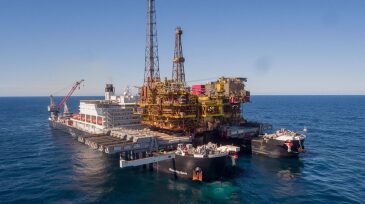
The long-term decommissioning of the historic Brent field has necessitated redevelopment of the younger Penguins field in the North Sea, where the UK hopes to see more revival projects in the coming years.
-
The shutting in of unprofitable offshore wells and the requirements for their plugging and abandonment is attracting more attention to what is being done with the associated subsea equipment. The benefits of leaving subsea systems in place vs. recovering them are being considered.
-
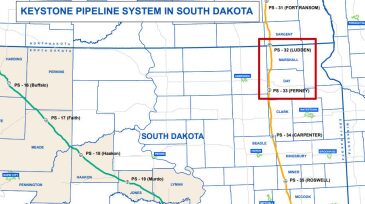
Weights used in the original construction of TransCanada’s Keystone Pipeline in South Dakota were identified as a preliminary cause of the failure that resulted in a 210,000-gal spill in November.
-
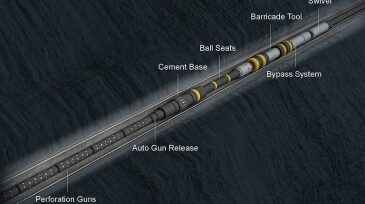
Archer’s Stronghold Barricade well decommissioning system leaves the casing in place, while perforating, washing, and cementing the annulus to create a cement barrier in a single trip.
-
Rising oil production in the Permian Basin has created an opportunity for midstream companies to acquire and expand pipeline infrastructure to handle a predicted spike in produced water.
-
A new downhole-tool-based abandonment system was developed and deployed successfully on four wells for a major operator on a field in the North Sea.
-
The supply chain is now actively working to develop low-cost solutions and is gaining valuable experience through recent projects (as documented in many recent SPE papers). Owners need to engage the supply chain early with the relevant asset data for planning and execution of decommissioning.
-
The optimization model presented in the complete paper is the first multioperator offshore network-optimization model that considers decommissioning in the Netherlands.