Onshore/Offshore Facilities

The 2026 Upstream Scale Guidelines establish a common workflow for field measurements, scale modeling, and risk assessment to support more consistent operational decisions.

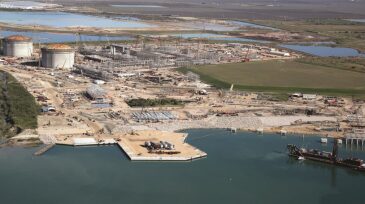
Shell has reached FID on LNG Canada Phase 2, a major expansion that will double the Kitimat facility’s LNG export capacity to 28 mtpa and strengthen long-term supply to growing Asian markets.

The long-term outlook analysis says a potential shift toward new construction could push 2026 production 3% above 2025 levels.
-
 Petronas cancels plans for the development of the Pacific Northwest LNG project in British Columbia intended to take away natural gas from the Montney formation for shipping to Asian countries. Low LNG prices strike a blow to the feasibility of the project.
 -
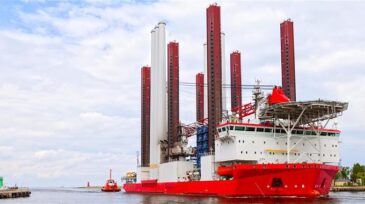
The top US wind power official told the offshore upstream sector that it can help build “smaller, leaner, and cheaper" wind turbine farms.
-
Part 2 of this two-part series presents a new methodology for sizing and rating three-phase separators based on quantifying the actual mechanisms and physics that govern separation performance. An example illustrates the calculations needed to achieve the specified outlet fluid qualities.
-
Operators need to take steps to protect their facilities from drone security breaches by outsiders. The costs an attacker incurs in developing tools to break into and control infrastructure is low compared to the costs an operator incurs in defending against those tools.
-
Cost and delivery of long-distance natural gas pipelines to a distant liquefaction facility at a warm-water port has become excessive, and environmental restraints have been increasing. An alternative is an offshore ice-resistant LNG port accommodating a new class of LNG transport vessels.
-
To reduce the risks to arctic pipelines from natural or geologic hazards, a more sophisticated approach to routing compared to traditional methods based on only the shortest length of pipe or connectivity to existing infrastructure is needed.
-
As the design methodologies evolve for arctic pipelines, strudel scour, permafrost thaw settlement, and ice gouging need to be factored in with environmental and geotechnical data, limit states, and trenching and backfilling activities.
-
New approaches to arctic activities include a concept for an offshore ice-resistant LNG export terminal, the design of subsea pipelines, and the optimal routing for the pipelines to mitigate the unique risks in arctic regions such as ice-gouging and permafrost thaw.
-
One of the world’s leading energy watchers says the second shale revolution will come in the form of LNG exports.
-
The expanded research and testing capabilities offer the only vertical test rig for subsea safety valves and one of the largest high-pressure natural gas test facilities in the world.