Onshore/Offshore Facilities

The 2026 Upstream Scale Guidelines establish a common workflow for field measurements, scale modeling, and risk assessment to support more consistent operational decisions.

Shell has reached FID on LNG Canada Phase 2, a major expansion that will double the Kitimat facility’s LNG export capacity to 28 mtpa and strengthen long-term supply to growing Asian markets.

The long-term outlook analysis says a potential shift toward new construction could push 2026 production 3% above 2025 levels.
-
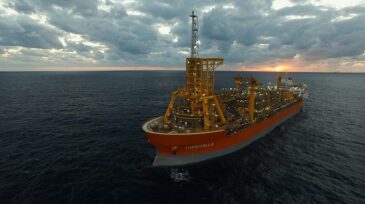
 Innovations characterize the deepwater Moho Nord field development, recently brought on stream by Total in the Republic of Congo, and the project creates significant value for the country.
 -
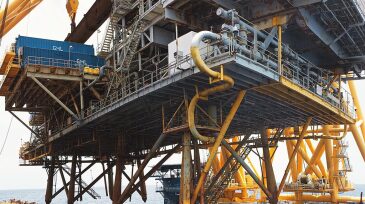
This paper provides an insight into the challenges encountered and overcome during installation of 20 subsea structures, some close to 1000 t in weight and in water depths of up to 1350 m, for the Gorgon project offshore Western Australia.
-
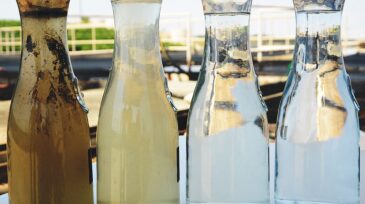
OriginClear agreed to a sales licensing deal for use of its Electro Water Separation technology at a Sinopec-operated shale gas site.
-
The complete paper evaluates optimization techniques to develop, or support, business cases for intelligent or smart wells.
-
This paper presents full-scale tests that show it is possible to obtain good cement placement when the tubing is left in the hole.
-
When companies are rewarded for short-term performance, there is little incentive to deal with long-term risks such as decommissioning. It’s so much easier to leave it for the future; but increasingly, that future is now.
-
The need to offset declining production from mature basins, as well as the ability of international oil companies to access larger reserves with the use of new exploration-and-production technology, will continue to drive deepwater expenditure.
-
Oil and gas producers in the Gulf of Thailand face unique technical challenges. This review of papers illustrates some of the innovative solutions used in the region.
-
New figures show that the facilities working in the Gulf of Mexico achieved higher crude output in 2016 than at any other period.
-
A senior process engineer from TechnipFMC discusses the ways in which inadequate design and sizing methodologies can lead to poor scrubber performance.