Onshore/Offshore Facilities

Argentina’s President Javier Milei met with TotalEnergies CEO Patrick Pouyanné and Eni CEO Claudio Descalzi in Paris to discuss Argentina’s energy sector, including projects linked to the Vaca Muerta shale formation and the development of the Argentina LNG export project.

The Absheron gas field expansion will supply additional natural gas to Azerbaijan’s domestic market and support its export commitments to Turkey, allowing Baku to stay focused on meeting its gas export obligations to Europe.

A credible custody-transfer record depends on far more than the accuracy of a single meter. It is the product of an integrated measurement chain. While meter performance supports measurement-system integrity, commercial confidence also depends on traceability, governance, and authorization.
-
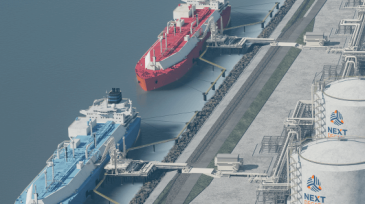
 Texas facilities get green light to export LNG. US export capacity is expected to almost double over the next 5 years.
 -
The Dalmatian project is a brownfield development and represents the world’s longest multiphase tieback by boosting at some 35 km; the boosting system is installed at approximately 6,000 ft water depth.
-
The unseasonably warm weather in the northern hemisphere and the rise of the global supply levels has resulted in record-low LNG prices. Adding to that, the coronavirus epidemic in China has reduced business and industrial activity, with January’s LNG imports dropping by about 10% year on year.
-
The data-driven maintenance program incorporates riser condition, usage, and fatigue analysis with a risk-based inspection process.
-
This paper shows how high-frequency, real-time drilling data from wired drillpipe has helped optimization of drilling performance and achievement of additional improvements in the New Mexico Delaware Basin.
-
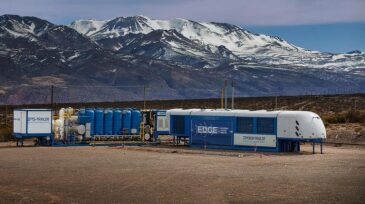
A producer in the Marcellus Basin selected Edge Gathering Virtual Pipelines 2 to capture and liquefy gas from its stranded wells in Tioga County. Initial operation is underway and is set to be ongoing until at least 2022.
-
Asian spot prices for LNG took a dive to multiyear lows, feeling the pressure of the lack of demand. Holders of previously agreed upon long-term buyer contracts seek renegotiation.
-
Topsides for the Peregrino C Platform in the Campos Basin offshore Brazil was installed by the world’s largest crane vessel, Heerema’s Sleipnir.
-
Developing an asset requires key investment decisions to be made early in the process, and as a result, some critical cost evaluations—such as abandonment—are often ballpark estimates. Adjusting the parameters for evaluating these costs can lead to more-accurate project valuations.
-
Natural gas has emerged as a potentially major player in the energy mix, but what role will price pressures play in sanctioning gas supply projects and in LNG markets?