Onshore/Offshore Facilities

Argentina’s President Javier Milei met with TotalEnergies CEO Patrick Pouyanné and Eni CEO Claudio Descalzi in Paris to discuss Argentina’s energy sector, including projects linked to the Vaca Muerta shale formation and the development of the Argentina LNG export project.

The Absheron gas field expansion will supply additional natural gas to Azerbaijan’s domestic market and support its export commitments to Turkey, allowing Baku to stay focused on meeting its gas export obligations to Europe.

A credible custody-transfer record depends on far more than the accuracy of a single meter. It is the product of an integrated measurement chain. While meter performance supports measurement-system integrity, commercial confidence also depends on traceability, governance, and authorization.
-
 Exponential thinking is called the “exponential surprise factor.” These underpinnings are observed on the tubular mechanics side also through data analytics, machine learning, artificial intelligence, and cognitive processes.
 -
The deal consists of stakes in nine shallow-water producing fields covering 108,000 gross acres in 10–50 m of water.
-
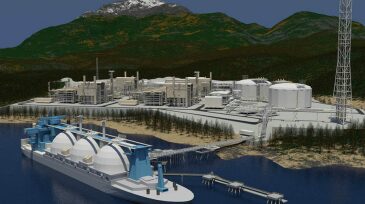
The $30.5-billion project is expected to produce 18 mtpa of LNG once it starts up; commissioning is expected sometime in the mid-2020s. Canada’s investment includes $160 million to fund energy-efficient turbines, which the government says will minimize greenhouse gas emissions.
-
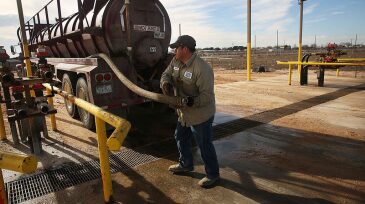
The well count and completion intensity of US tight oil and gas operations have grown in recent years, and rising pressure from environmental regulations means that produced water management has become a key focus for operators.
-
Hydroniq will deliver a hull-integrated seawater cooling system for a cable-laying vessel the Norwegian shipbuilder Vard is designing and building for Prysmian Group.
-
A new regulation includes provisions related to the timely abandonment of "dormant sites," a new site classification that refers to inactive wellsites operated by solvent companies.
-
SponsoredParaffins present in crude oil can gel or precipitate, which can cause pipeline and production system blockages. Dow’s ACCENT wax inhibitors are high-active, aqueous-based chemistry, that efficiently control paraffin deposition in pipelines.
-
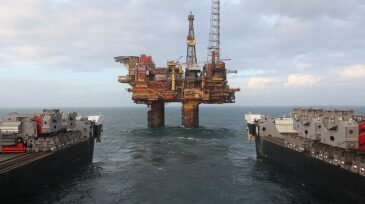
Bravo is the second of four platforms to be decommissioned and removed from the Brent field, following Brent Delta in 2017. The field has produced approximately 3 billion boe since 1976.
-
The $20-billion FID is the largest ever for a sub-Saharan oil and gas project. The project’s location on the African east coast puts it in optimal position to sell LNG to the lucrative Asian market.
-
The Japanese operator will submit a development plan to the Indonesian government within the next few weeks, with FID for the $20-billion project coming around 2022. Abadi LNG is projected to deliver 9.5 mtpa of LNG.