Onshore/Offshore Facilities

The Absheron gas field expansion will supply additional natural gas to Azerbaijan’s domestic market and support its export commitments to Turkey, allowing Baku to stay focused on meeting its gas export obligations to Europe.

A credible custody-transfer record depends on far more than the accuracy of a single meter. It is the product of an integrated measurement chain. While meter performance supports measurement-system integrity, commercial confidence also depends on traceability, governance, and authorization.

Despite significant progress in capturing associated gas for domestic use, Iraq remains the world’s third-largest gas-flaring country as it aims for higher oil and gas production targets.
-
 Plans call for license partner Aker BP to serve as operator during the development phase, with operatorship reverting to DNO after first oil in 2028.
 -
Production from the Búzios field now tops 1 million B/D with six floating production systems in operation and more on the way.
-
In lifting force majeure, TotalEnergies says it will restart construction on its Mozambique LNG project as soon as the government agrees to a revised budget and schedule that targets shipping first product in 2029.
-
A new Eni/Petronas venture is targeting 500,000 BOE/D in output from combined upstream portfolios across Malaysia and Indonesia.
-
BPX Energy will retain operatorship of the assets after the sale of its interests to private investment firm Sixth Street is complete.
-
Thailand’s PTTEP is partnering with subsea joint venture SLB OneSubsea to expand capacity across two fields offshore Malaysia.
-
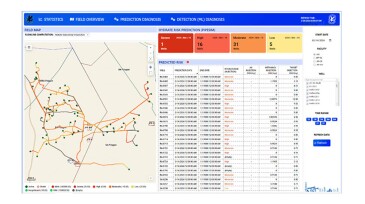
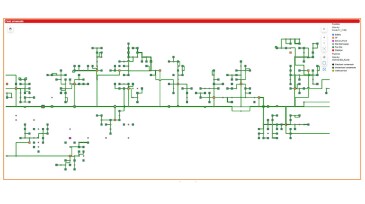
This paper discusses a comprehensive hybrid approach that combines machine learning with a physics-based risk-prediction model to detect and prevent the formation of hydrates in flowlines and separators.
-
This paper explains that the discovery of specific pressure trends, combined with an unconventional approach for analyzing gas compositional data, enables the detection and prediction of paraffin deposition at pad level and in the gathering system.
-
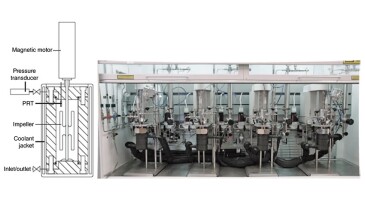
This paper presents an approach to subsea hydrate-risk management based on the understanding that some crudes have induction properties that delay hydrate formation even when the pressure and temperature conditions reach the hydrate thermodynamic region.
-
The advancement of flow-assurance technology can be characterized as a transition from reactive to proactive, from laboratory-scale examination to field applicability, and from data-driven to big data and physics integration.