Onshore/Offshore Facilities

The Absheron gas field expansion will supply additional natural gas to Azerbaijan’s domestic market and support its export commitments to Turkey, allowing Baku to stay focused on meeting its gas export obligations to Europe.

A credible custody-transfer record depends on far more than the accuracy of a single meter. It is the product of an integrated measurement chain. While meter performance supports measurement-system integrity, commercial confidence also depends on traceability, governance, and authorization.

Despite significant progress in capturing associated gas for domestic use, Iraq remains the world’s third-largest gas-flaring country as it aims for higher oil and gas production targets.
-
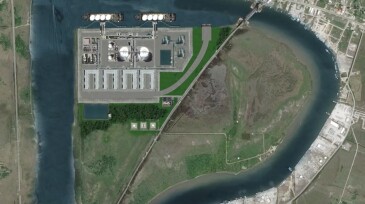
 Louisiana-based project will use operator’s Optimized Cascade process to turn feed gas into LNG.
 -
This paper reviews the motivation and development of response-based forecasting from the perspective of the authors, reviewing examples and processes that have served as validation and led to modeling refinement.
-
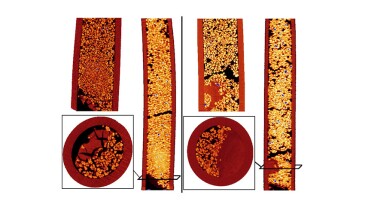
This study contributes to enhancing the understanding of scale-inhibitor retention in rock formations.
-
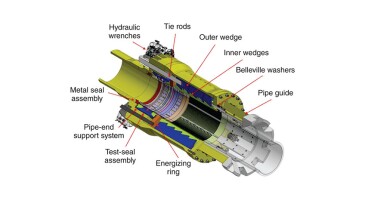
This paper compares traditional welded techniques, such as above-water repair methods and underwater hyperbaric welding, with the novel options offered by subsea connectors purposely developed for corrosion-resistant-alloy-clad pipelines.
-
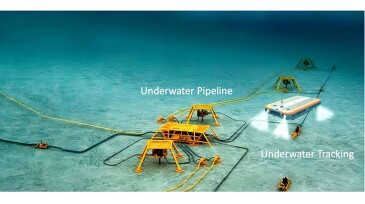
This paper introduces a technology for offshore pipeline inspection centered on an autonomous robotic system equipped with underwater computer vision and edge-computing capabilities.
-
Updates about global exploration and production activities and developments.
-
The offshore industry is actively embracing a digital-first, low-carbon future, supported by scalable demonstrators, intelligent systems, and integrated engineering approaches now entering precommercial or early-deployment stages.
-
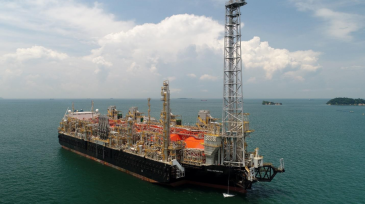
The floating liquefied natural gas ship Hilli Episeyo, currently offshore Cameroon, is planned for upgrades before redeployment to Argentina.
-
As a champion of floating natural gas liquefaction technology, Eni is positioning itself to play a major role in Africa with a fast-growing gas-liquefaction capacity targeted to reach 14 million tonnes per year by 2028.
-
The initial phase of the carbon capture and storage project has a capacity of 1.5 million tonnes per year, with a second phase—due online in 2028—expected to bring the storage capacity to 5 million tonnes per year.