Onshore/Offshore Facilities

The Absheron gas field expansion will supply additional natural gas to Azerbaijan’s domestic market and support its export commitments to Turkey, allowing Baku to stay focused on meeting its gas export obligations to Europe.

A credible custody-transfer record depends on far more than the accuracy of a single meter. It is the product of an integrated measurement chain. While meter performance supports measurement-system integrity, commercial confidence also depends on traceability, governance, and authorization.

Despite significant progress in capturing associated gas for domestic use, Iraq remains the world’s third-largest gas-flaring country as it aims for higher oil and gas production targets.
-
 Gas production from the field will be supplied to both the local market and the Nigeria LNG plant.
 -
Supermajor expands its global LNG footprint in a deal that will grow its presence in Asia and Europe.
-
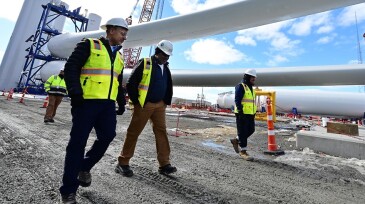
The exercise at Vineyard Wind’s Marine Coordination Center successfully evaluated Vineyard Wind’s ability to activate an incident management team and carry out the procedures in their approved oil spill response plans.
-
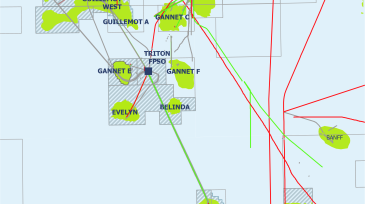
The EPCI contract will see a new water-injection pipeline added to the complex.
-
A survey conducted by Unite the Union had 75% of respondents reply that they would never fly in an Airbus Super Puma helicopter amid safety concerns.
-
Using autonomous systems creates efficiencies, but, even more critically, it also allows engineers to be engineers.
-
The sales and purchase agreement obliges Taiwan’s national oil company, CPC, to buy 4 mtpa of liquefied natural gas for 27 years while Taipei also acquires equity in the North Field East.
-
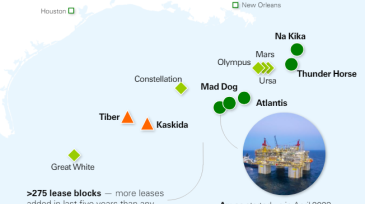
The deepwater Gulf of Mexico project in the Paleogene will require a 20K-psi production semisubmersible.
-
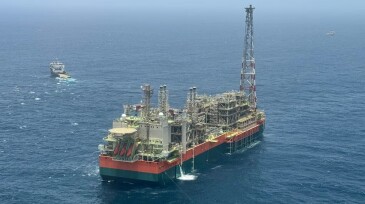
Mooring operations underway following arrival of the GTA FPSO on-site at the maritime border of Mauritania and Senegal.
-
The project to stabilize and maintain the gas field’s production plateau supports Algeria’s bid to underpin its growing role in supplying European gas markets.