Onshore/Offshore Facilities

The events will be co-located 3–5 May 2027 at Reliant Park in Houston, Texas.

The supermajor said the fields are not expected to contribute meaningfully to its production profile by 2030.

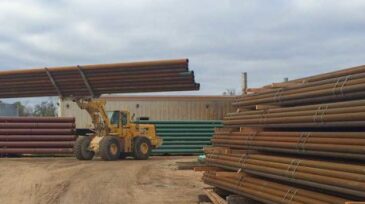
This paper reviews a proof-of-concept project in which surplus casing pipes were used in the fabrication of purposefully designed artificial reef structures for the enhancement of biodiversity and commercial fisheries.
-
-
 Cutting-edge computing and subsea wireless camera technology deployed on a pipeline construction project enhanced diver safety and generated significant cost savings by avoiding the need for additional subsea vessels.
 -
The pipeline system will have the initial capacity to deliver 150,000 B/D of crude oil to multiple delivery points, accessing local refineries and connecting to several downstream pipelines.
-
The move comes weeks after Gazprom announced a final development concept for the project. Other projects Shell is developing with Gazprom, including the Sakhalin 2 export facility, will not be impacted by the decision.
-
The gas agreement clears the way for the FEED phase; FID expected in 2020.
-
The independent oil and gas company is aiming to build shareholder value through a change in business focus to midstream with this step into pipeline service and construction.
-
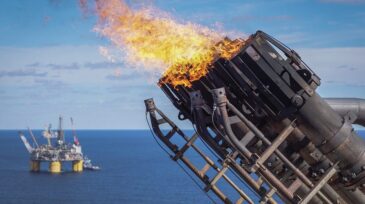
During the last decade, the use of drones for industrial asset inspections has grown significantly. The ability to inspect in-service flares can eliminate millions of dollars of operational expenditure and mitigate safety risks presented by traditional access methods.
-
Aker Solutions and FSubsea have agreed to a joint venture, named FASTSubsea, to help operators increase oil recovery.
-
A growing sector of water midstream companies is in the Permian Basin looking to take advantage of a business opportunity borne out of rising produced water volumes. Billion-dollar valuations for these companies in the near future could become a reality.
-
The next big wave of decommissioning and abandonment projects is set to occur in the Asia-Pacific region, and APAC’s operators are now tasked with finding cost- and time-effective ways of unwinding their huge agglomeration of wells and facilities.