Onshore/Offshore Facilities

The 2026 Upstream Scale Guidelines establish a common workflow for field measurements, scale modeling, and risk assessment to support more consistent operational decisions.

Shell has reached FID on LNG Canada Phase 2, a major expansion that will double the Kitimat facility’s LNG export capacity to 28 mtpa and strengthen long-term supply to growing Asian markets.

The long-term outlook analysis says a potential shift toward new construction could push 2026 production 3% above 2025 levels.
-
 When a new horizontal well in Asia was incapable of unassisted flow, coiled tubing (CT) was selected for the perforation and stimulation intervention. Mechanical isolation was required to ensure that the stimulation fluids entered only the new zones.
 -
This paper presents work performed to characterize the probability of collapse as a function of reservoir-abandonment pressure using reliability-based design (RBD).
-
A probabilistic approach was introduced to improve interpretation of data from electromagnetic corrosion logs. This paper presents a statistical risk-based approach to predicting casing leaks using electromagnetic corrosion logs.
-
The objective of this study is to investigate comprehensively the effects of the expansion process on the pipe mechanical properties and collapse performance and to develop a reliable risk-based collapse-strength design for the expandables.
-
Wearable computers are turning heads in the oil and gas industry and appear to be on a trajectory for widespread adoption.
-
Bureau Veritas made available its guide to decommissioning regulations in the UK Continental Shelf.
-
Bureau Veritas made available its guide to decommissioning regulations in the UK continental shelf.
-
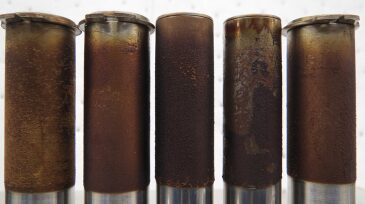
Cold finger tests are a standard method for testing paraffin inhibitors, but there is no standard testing protocol, and sometimes different labs can see inconsistent results. Shell and BHGE studied the root causes of these issues.
-
Ground sensors on assets over a broad area have limited returns on investment if the asset life cycle is less than 10 years, and obsolescence of the technology if it exceeds 10 years. Complementing sensors with aerial remote sensing at scale may help to mitigate these issues.
-
Oversizing a separator ensures meeting the life cycle needs of a facility, but are we setting ourselves up for failure in the long run? With peak rates typically being short-lived at best, or at worse, well beyond actual production rates, more weight needs to be given to the tail-end of production.