Onshore/Offshore Facilities

The 2026 Upstream Scale Guidelines establish a common workflow for field measurements, scale modeling, and risk assessment to support more consistent operational decisions.

Shell has reached FID on LNG Canada Phase 2, a major expansion that will double the Kitimat facility’s LNG export capacity to 28 mtpa and strengthen long-term supply to growing Asian markets.

The long-term outlook analysis says a potential shift toward new construction could push 2026 production 3% above 2025 levels.
-
 CEO Bob Dudley, who calls BP’s UK North Sea business one of its “crown jewels”, will address hundreds of delegates at the opening plenary session at Europe’s foremost exploration and production technical conference and exhibition.
 -
This paper considers some of the challenges and learnings associated with the application of chemicals for preservation of coated pipe/flowline for a major liquefied-natural-gas (LNG) project in Australia.
-
Identifying the type of corrosion is the first step in the analysis and prevention of corrosion-related failures. Visual inspection of the pit morphology can provide insights into the type of corrosion that is occurring.
-
The accurate and precise analysis of scale inhibitors—in conjunction with other field data such as ion analysis, total suspended solids, and productivity index—plays an important role in making decisions about the efficiency of scale squeeze and continuous chemical injection treatments.
-
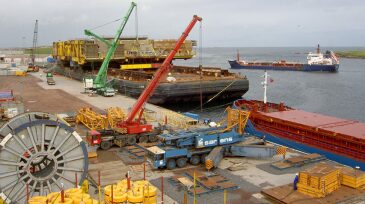
Heavy-lift vessels aim for opportunities in decommissioning in UK North Sea and Norway and offshore wind projects.
-
Gazprom’s third pipeline to course through the Arctic further decreases Russia’s dependence on using Eastern European countries as thoroughfares to export its gas to markets in Western Europe.
-
A former technical manager with Petrobras discusses the development of the company’s flow assurance philosophies and strategies.
-
As the boom of the 1970s and 1980s makes way for the first tranche of major decommissioning projects, the market for abandonment and decommissioning has grown over the past 5 years. To deliver these projects in a safe and economic way, decommissioning needs to be accepted as a serious challenge.
-
Mexico’s long awaited deepwater auction saw 8 out of 10 blocks awarded but there remains plenty of work to be done before activity ramps up, including finalizing regulatory rules, upgrading ports, and optimizing the bid rules for future auctions.
-
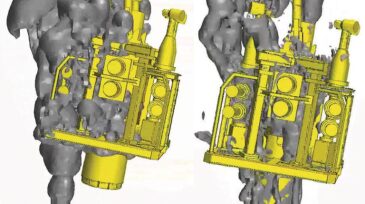
Developing a well-specific subsea-capping contingency plan involves assessing the feasibility of deploying a capping stack from a floating vessel, determining the weight and stability, and performing dynamic-flow simulations of closing the capping stack outlets.