Onshore/Offshore Facilities

Despite significant progress in capturing associated gas for domestic use, Iraq remains the world’s third-largest gas-flaring country as it aims for higher oil and gas production targets.

The 2026 Upstream Scale Guidelines establish a common workflow for field measurements, scale modeling, and risk assessment to support more consistent operational decisions.

Shell has reached FID on LNG Canada Phase 2, a major expansion that will double the Kitimat facility’s LNG export capacity to 28 mtpa and strengthen long-term supply to growing Asian markets.
-
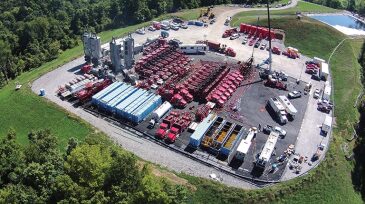
 While the collapse in oil price is reshaping opinions about the North American shale revolution and the outlook for oil producers, natural gas producers in the United States are in a somewhat different position
 -
The global industry is feeling the pain of the oil price plunge, but the UK feels it more acutely. Exploration drilling is at rock bottom levels, the offshore UK Continental Shelf is one of the world’s most expensive from which to produce a barrel of oil, and investment spending is expected to fall.
-
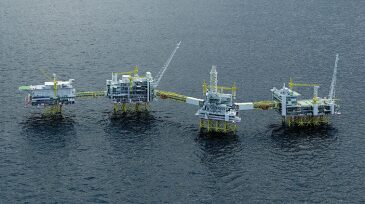
Statoil is going to work to put its enormous Johan Sverdrup discovery into production, showing that even one of the most explored parts of the North Sea still has significant potential.
-
Active slug-control methods have been developed in recent years. One such system is a relatively inexpensive solution developed by Shell that has proved to be very effective in stabilizing slugging in flowlines and risers.
-
As subsea electric lines age, they are prone to cracks that allow seawater in, reducing their effectiveness, and if the leaks are bad enough, they can shut down operations.
-
Conventional wisdom implies that natural-gas demand will continue to grow, especially in locations where coal is being phased out, nuclear growth has slowed/reversed, and renewables remain a small and intermittent energy source for the foreseeable future.
-
A data-driven approach to successfully analyze and evaluate production-fluid impact during facility system divert events is presented. The work flow effectively identifies opportunities for prompt event mitigation and system optimization.
-
Low prices will constrain maintenance and modifications in the coming year. However, maintenance can only be delayed so long, leading to a long-term outlook of growth in the market for maintenance, modifications, and operations.
-
An underperforming scrubber that was suffering from too much oil carry-over is described along with options for debottlenecking and improving performance.
-
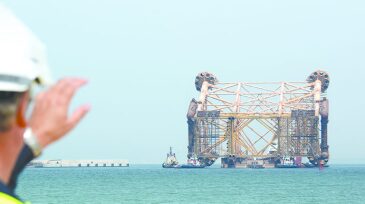
Construction costs, contractor involvement, flow assurance, and the integration of new technologies created to improve production are some of the deepwater challenges exacerbated by the current low price environment.