Onshore/Offshore Facilities

Despite significant progress in capturing associated gas for domestic use, Iraq remains the world’s third-largest gas-flaring country as it aims for higher oil and gas production targets.

The 2026 Upstream Scale Guidelines establish a common workflow for field measurements, scale modeling, and risk assessment to support more consistent operational decisions.

Shell has reached FID on LNG Canada Phase 2, a major expansion that will double the Kitimat facility’s LNG export capacity to 28 mtpa and strengthen long-term supply to growing Asian markets.
-
 Global decommissioning projects are ramping up as many installations near the end of their life cycle. Many operators are now planning for major removal projects. Changes in technology and regulations have caused operators to make significant shifts in well abandonment operations.
 -
Semoga and Kaji fields experienced reservoir souring and suffered a history of calcium-carbonate (CaCO3) -scale cases before a proper scale-inhibition program was implemented. Problems with a free water knockout discovered continued scale issues, leading to investigation of the reasons.
-
This paper provides details of comprehensive computational-fluid-dynamics (CFD) -based studies performed to overcome the separation inefficiencies experienced in a large-scale three-phase separator.
-
This paper highlights the issues and challenges surrounding pipeline trenching and burial in ice-gouge environments. The current state of practice is discussed along with the technology gaps that need to be addressed.
-
Bridging the gap between facilities and reservoir engineers is critical in designing systems that are flexible enough to allow a spectrum of reservoir feed conditions to be accommodated over the life cycle of the field. While subsurface uncertainties can't be eliminated, they can be managed.
-
Recent activities around career planning for facilities engineers led me to a list of "must read" books. The recent ATCE generated two revelations. As an industry, we do a poor job of managing major capital projects, and we do not know how to design separators.
-
At the end of the day, when you are working with heavy oil, the question is how to design your system, including both the layout and the functional aspects of various equipment.
-
Operators’ demands for structural designs are changing along with the need to produce from harsher environments, deeper waters, remote areas, and marginal fields. New-builds and modifications require different approaches in assessment of cost, design, and construction.
-
A realistic computational fluid dynamics (CFD) simulation of a field three-phase separator has been developed. Further, a useful approach to estimating the particle size distribution in oilfield separators was developed. The predicted separation efficiencies are consistent with oilfield experience.
-
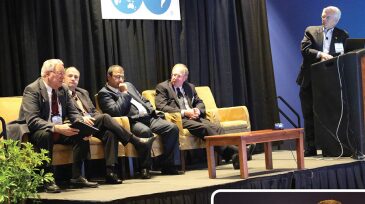
ATCE included expanded content for project, facilities and construction professionals. Panels discussed our performance in managing megaprojects and our challenges in designing separation equipment. Two technical paper sessions were also included.