Onshore/Offshore Facilities

As the pace of new discoveries slows and high-quality prospects become harder to find, oil companies may need to rely more heavily on mature fields to maintain production and support future supply.

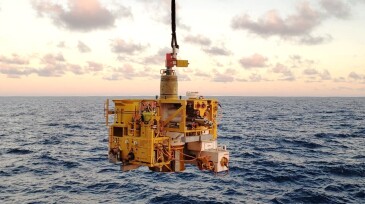
With confidence in subsea boosting performance growing, BP is incorporating pumping systems into both greenfield developments and brownfield expansions.

The legacy of per- and polyfluoroalkyl substances (PFAS) is a persistent problem in many industries, including upstream oil and gas. In this Q&A, remediation expert Grant Scott presents the trouble with these “forever chemicals” and the mitigating efforts being used.
-
 The deal expands ONEOK’s gas transmission and processing footprint in the Permian, Louisiana, and Oklahoma.
 -
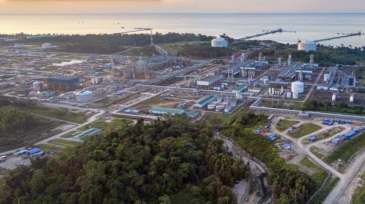
The plan calls for developing a gas field, CCUS, and onshore compression, with first production expected in 2028.
-
This paper reviews decommissioning and abandonment in Nigeria, looks at candidate identification strategies, breaks down the methods and best practices involved, and examines the requirements for openhole and cased-hole abandonment.
-
Operator also announces plans to deploy continuous, real-time detection equipment at all its operated upstream sites, including GranMorgu, by the end of 2025.
-
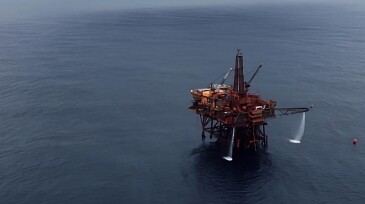
Carnarvon basin job will be McDermott’s largest decommissioning project to date.
-
The pitfalls of utilizing an existing vessel without proper review are highlighted.
-
Contract awards for EPC on shore-based liquification facilities and FEED for upstream offshore infrastructure in Mozambique’s ExxonMobil–Eni project bodes well for an East African LNG hub.
-
The late-season hurricane caused damage across western Cuba and now is setting its sights on the US Gulf of Mexico.
-
Subject-matter experts from industry and academia advanced distributed fiber-optic sensing technologies and their implementation in flow measurement during a special session.
-
GE Vernova and Vineyard Wind provided an update on the implementation of their plan to safely remove the remainder of the damaged blade on turbine AW-38, remove any remaining debris, complete environmental studies, implement actions for blade readiness for service, and, ultimately, resume turbine installation and operations.