

Petroleum reserves

The shale revolution, the Paris Agreement, and the global pandemic each transformed energy markets. Now, industry leaders say energy pragmatism is emerging.

Bridging the gap between foundational guidance and real-world application, SPE’s Oil and Gas Reserves Committee is advancing PRMS education with a new, peer-reviewed training initiative. This article highlights the evolution of the PRMS knowledge base and introduces the PRMS Training Master Slides—a modular, instructor-led framework designed to improve consistency, cl…

This paper aims to assess the effectiveness of using advanced integrated production-data-analysis techniques for condensate-rich tight gas fields.
-
 In this work, the authors perform automatic decline analysis on Marcellus Shale gas wells and predict ultimate recovery for each well.
 -
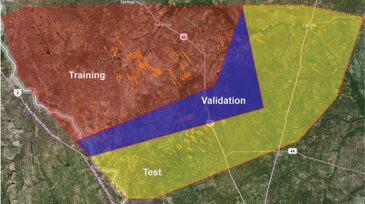
The authors present a geology-driven deep-learning estimated-ultimate-recovery (EUR)-prediction model for multistage hydraulically fractured horizontal wells in tight gas and oil reservoirs.
-
In drawdown management, operators can exert control over the downhole flow pressure, reservoir pressure, and choke size to avoid estimated ultimate recovery (EUR) losses.
-
The need for cost and capital efficiency calls for careful integration of technical and commercial elements.
-
This paper will examine ways in which Chance of Development (CoD) can be defined better, methods for its estimation, and its appropriate application along with common misuses.
-
Members of SPE continue to share valuable and useful information through the more than 90 papers on reserves and asset management presented at various meetings, symposiums, and workshops this past year.
-
The Guidelines for Application of the Petroleum Resources Management System (AG) document was issued in November 2011.
-
Reserves- and resources-evaluation methods in unconventional reservoirs are different from those for conventional reservoirs.





Page 7 of 8