Pipelines/flowlines/risers

This paper presents a study that confirms glass-reinforced-epoxy-lined tubing as a reliable, cost-effective solution for long-term water-injection service in moderate-salinity offshore environments.

A circular economy emphasizes reducing, reusing, recycling, and removing parts of existing systems to optimize them with respect to resource utilization. The following papers demonstrate how these pillars of a circular economy are enabling operators all over the world.

This paper introduces in-pipe inspection technologies enabling high-resolution digital measurements of tubular internal diameter and wall thickness for critical downhole applications.
-
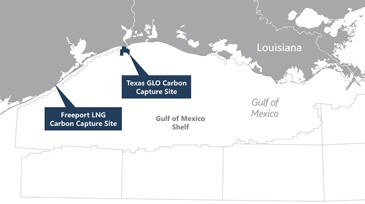
 Companies want to build pipelines to capture and store carbon, but a new report warns that regulators aren’t prepared.
 -
South Africa’s Sasol has nixed plans to invest in the proposed African Renaissance Pipeline, opting instead to import LNG by tanker from Mozambique where TotalEnergies, Eni, and ExxonMobil are developing projects.
-
The Canadian Government has stopped funding the Trans Mountain Pipeline, whose future will depend on private investors.
-
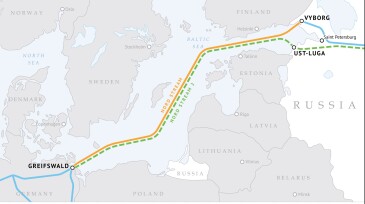
The pipeline project was completed in September but whether it will flow is now as uncertain as ever as both Germany and the US seek to shut the project down.
-
Oil production is reaching new levels in the Permian Basin and it has created some uncertainty about where all the associated gas will go.
-
The new project will use EnLink’s existing pipeline infrastructure and Talos’ newly acquired 26,000-acre sequestration area.
-
Two cruises were completed for DenAr Ocean Engineering for the TPAO Sakarya gasfield pipeline route investigation and site survey project.
-
The Lake Albert project includes the development of oil fields, processing facilities, and an electrically heated pipeline network.
-
The facility will be a commercial-scale CO2 sequestration hub in the DJ Basin.
-
The new 165-MW facility uses flare gas from the adjacent Sarqala field to generate power for local use.