Production
This paper proposes a novel, real-time pump failure prediction method using machine learning with scaled load ratio to accurately predict pump failures using only surface pump load data.

Five agreements target more than 11 Tcf of offshore gas and include flare-reduction technology.

Disputes over tanker fees and the ongoing military operation in Lebanon represent potential fault lines for the tentative peace deal.
-
 The paper investigates the effect of complex environments on DFIT interpretation and presents a systematic method to analyze the data.
 -
The complete paper uses 3,782 unconventional horizontal wells to analyze the effect of proppant volume and the length of the perforated lateral on short- and long-term well productivity across the Permian Basin.
-
In the complete paper, the authors present a novel approach that uses data-mining techniques on operations data of a complex mature oil field in the Gulf of Suez that is currently being waterflooded.
-
The average geothermal gradient in the subject deepwater field in Nigeria is 4.37°C/100 m, nearly twice the gradient in most fields. As a result, the magnitude of the expected annular pressure buildup (APB) during steady-state production is large enough to threaten well integrity.
-
The complete paper describes the first implementation of a solution to control fracture height for conventional wells in the Pannonian Basin.
-
The complete paper describes the first successful implementation of natural dumpflooding offshore Malaysia as a case study to provide insight into the value of using the approach to maximize oil recovery in a mature field, particularly in a low-margin business climate.
-
In this year’s papers on mature fields and well revitalization, I have found operators focusing on making all-out efforts to improve their ongoing waterflood operations to extend the life of existing wells, which is preferred over drilling new infill wells.
-
What is to become the largest shale producer in the Permian Basin is stepping up its efforts to curb emissions and has shared new details in its annual sustainability report.
-
The complete paper outlines some of the challenges involved in late-life field management and how Reserves assessment may be affected.
-
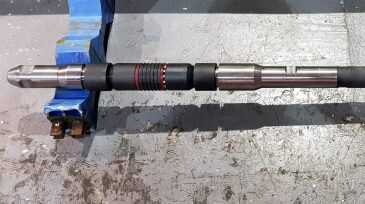
Final lab testing has been completed and field trials of the ultrahigh expansion bridge plug will begin by the end of this year.