Production

Unlike traditional AI approaches that rely primarily on historical data, physics-based AI integrates physical laws, engineering expertise, and operational constraints directly into the learning process. Three recent SPE papers illustrate how this paradigm is transforming the industry through intelligent condition monitoring, virtual sensing, and autonomous production …

This research focuses on combining physics-based expert rules with machine learning to improve the detection of failure-related events in electrical submersible pumps.

A combination of physics principles and machine-learning techniques is used in this work to develop a virtual flowmeter for oil-production optimization in electrical-submersible-pump-lifted oil wells, resulting in reliable generalization.
-
 Angola leaves OPEC after 16 years to leverage its oil resources for economic growth.
 -
Once considered as being on the brink of abandonment, aging reservoirs are proving to be valuable assets as innovative hydrocarbon recovery techniques and re-envisioning of these fields for decarbonization opportunities are transforming them into reservoirs of opportunity.
-
The “Western Haynesville” boasts big gas IPs with potential running room.
-
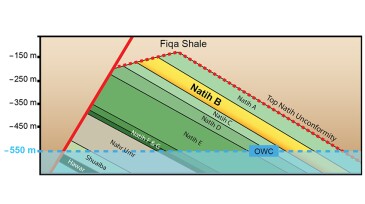
The authors of this paper develop an integrated technical approach that can be used to unlock one of the largest undeveloped resources in an operator’s portfolio.
-
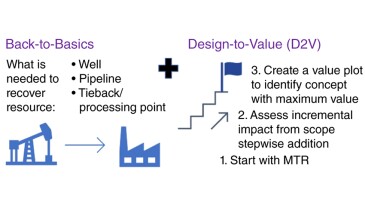
This paper describes a revamped methodology for field-development strategy formulation, particularly for marginal hydrocarbon resources, by shifting the mindset toward designing with an aim to value in order to improve project viability.
-
This paper adds to ongoing research in hydrogen storage, focusing on efficient extraction of hydrogen to be stored potentially in depleted unconventional formations.
-
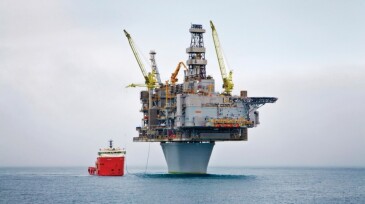
The C-NLOPB has green-lit the supermajor’s plans to develop new sands within the field’s Jeanne d’Arc formation.
-
The well was spudded from the new Azeri Central East platform in the giant ACG field in the Caspian Sea.
-
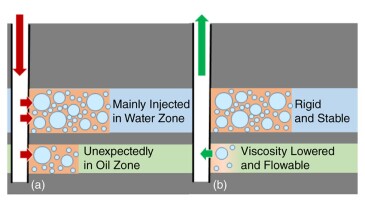
This paper presents the evaluation results of a water-shutoff agent based on an emulsion-type chemical material with nanoparticles.
-
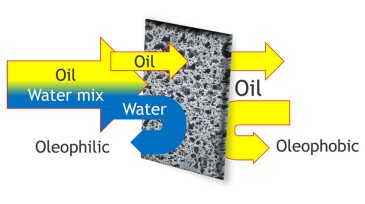
The authors of this paper discuss the use of dissolved polystyrene waste for the preparation of nanomembranes for separation of hydrocarbon pollutants from wastewater streams.