R&D/innovation

A shared digital mindset across subsurface, subsea, and drilling and wells is accelerating well planning at Vår Energi.

With funding opportunities improving, developers and researchers are focused on shortening project learning cycles and reducing uncertainty to attract more capital and speed deployment.
By integrating reservoir simulation, probabilistic seismic hazard and risk assessment, and machine learning, this study provides a practical framework for translating complex geoscientific research into evidence-based policy and field operations, achieving measurable reductions in seismic risk indicators in the Groningen gas field.
-
 Fed by big data loads from big operators, a university consortium and software firm are each working to make upstream data access as quick and easy as a Google search.
 -
The organizations will receive more than $4.1 million for research projects aiming to improve protocols to minimize the environmental effect of oil spills in water.
-
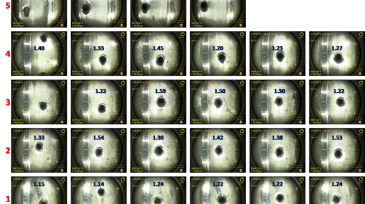
Pictures shot in fractured wells show how a high-pressure slurry of water and sand carves up the perforations.
-
Contrary to popular imagination, which favors John Wayne stereotypes heroically rescuing the oil industry with wrench and hammer, the oilfield is a place of exquisite engineering, the match of anything on Earth, a marvel of innovation at the biggest and smallest scales.
-
Technology transfer in the oil business is too often discussed from a lens of bringing in outside innovations. But what happens when innovation escapes the industry’s orbit and finds a new home?
-
JPT asked several active SPE members about the appeal of petroleum engineering, the significance of the work they do, and what the future may hold. Here are some of their answers.
-
Unconventional development has made it clear to Erdal Ozkan that conventional theory overlooks a lot of potentially productive rock. He talks about looking for ways to do better as part of JPT’s tech director report.
-
Producers in Texas have claimed an economic victory with their transition to local sands that they once avoided using in horizontal wells due to their low-quality.
-
Slow uptake of innovation and new technology is an oft-repeated criticism of the oil and gas industry.
-
When it came to decide where to collect a critical sample of fractured rock, a new method for turning microseismic data into a heat map designed to display the most intense fracturing activity was considered.