R&D/innovation

With funding opportunities improving, developers and researchers are focused on shortening project learning cycles and reducing uncertainty to attract more capital and speed deployment.
By integrating reservoir simulation, probabilistic seismic hazard and risk assessment, and machine learning, this study provides a practical framework for translating complex geoscientific research into evidence-based policy and field operations, achieving measurable reductions in seismic risk indicators in the Groningen gas field.

The US Department of Energy has awarded more than $99 million to 21 projects that will advance geothermal development through field-scale testing of next-generation technologies and exploration drilling programs across the US.
-
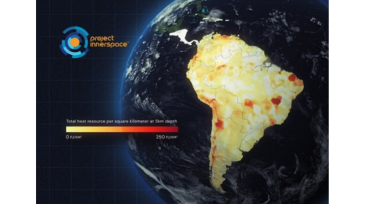
 The freely accessible online platform is the latest in a series of maps designed to reveal the continent’s untapped geothermal potential.
 -
A 15-year SPE member, he will oversee the Office of Fossil Energy and the National Energy Technology Laboratory, managing a $5-billion R&D portfolio spanning coal, oil, natural gas, and critical minerals with the goal of advancing affordable and reliable energy solutions.
-
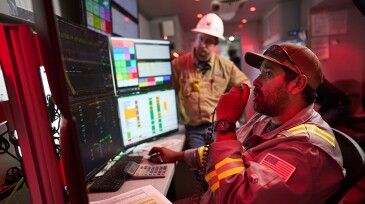
This article is the fourth in a Q&A series from the SPE Research and Development Technical Section focusing on emerging energy technologies. In this piece, David Reid, the CTO and CMO for NOV, discusses the evolution and current state of automated drilling systems.
-
Oil and gas experts encourage human/AI partnerships that can “supercharge” capabilities to create competitive advantages.
-
The US supermajor is using one of its lowest-value hydrocarbon products to generate double-digit production increases in its most prolific US asset.
-
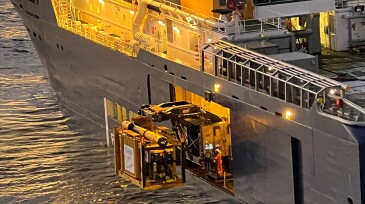
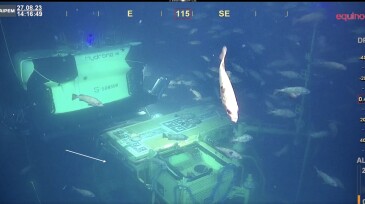
With the right infrastructure and interoperability, subsea resident robotics could unlock more frequent, cost-effective inspections—and a new standard for offshore efficiency.
-
Emerging solutions could solve current subsea pain points, while a new taxonomy system could clarify the capabilities of the expanding domain of underwater vehicles.
-
This article is the third in a Q&A series from the SPE Research and Development Technical Section focusing on emerging energy technologies. In this piece, Zikri Bayraktar, a senior machine learning engineer with SLB’s Software Technology and Innovation Center, discusses the expanding use of artificial intelligence in the upstream sector.
-
Successful in other applications, self-healing coatings could be the oil industry’s ticket to fighting corrosion and extending the life of steel.
-
The service giant shares how its new technology can sense rock properties 50 ft ahead of the bit in horizontal wells.