Reservoir

Industry experts at URTeC assessed more than a decade of unconventional growth while discussing where productivity gains will come from next.
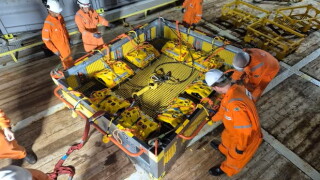
The technology has passed its first phase of qualification, with 84 nodes placed on the seafloor at a depth of 2,000 m to acquire 4D seismic data in the pre-salt Santos Basin.

Chevron and Halliburton describe how they built and deployed the fully autonomous closed-loop fracturing system that enables subsurface-driven optimization.
-
 With the easy conventional oil in Argentina having been produced, one remaining way to find new oil in existing fields is to convert fields from primary or secondary production to secondary or tertiary production, respectively.
 -
Computational advances in reservoir simulation have made possible the simulation of thousands of reservoir cases in a practical time frame. This enables exhaustive exploration of subsurface uncertainty and development/depletion options.
-
With the current changes in the industry, are we seeing the demise of unconventional developments? No, clearly not. The unconventional industry is adapting to deliver the energy demands of the future despite the low oil price.
-
This paper describes how seismic reservoir integration, advanced production analysis, and accurate nanoscale and 3D full-field simulations may address profitability issues and help oil companies to be more efficient in developing unconventional portfolios.
-
This paper presents results from the analysis of the effect of in-fill drilling on parent-well performance, and describes a simplistic approach to understanding the effect of the quest for operational efficiencies and economic cycles on development strategies.
-
In this study, detailed petrophysical and geological field models focusing on the middle and lower members of the Bakken Formation were developed.
-
Carbon dioxide (CO2)/water foams are of interest for mobility control in CO2 enhanced oil recovery (EOR) and as energized fracture fluids or as hybrid processes that combine aspects of both processes.
-
There remain a number of challenges with CO2 EOR. These include gravity override, poor sweep efficiency, and economic factors.
-
Reservoir-simulation-model inputs are numerous, and uncertainty is pervasive—before, during, and after development. With the pressure to deliver results quickly, how do we find the right balance?
-
In upstream oil and gas, cloud computing is very immature because the industry has always been challenged by storage and computational capability. However, high-performance cloud computing may create an opportunity for smaller companies lacking infrastructure for scientific applications.