Reservoir

A report commissioned by Havtil, the Norwegian Ocean Industry Authority, calls for better dialogue regarding pore-pressure uncertainty and higher-end drilling techniques like managed pressure drilling as methods to reduce the risk of well-control events.

The events will be co-located 3–5 May 2027 at Reliant Park in Houston, Texas.

Bridging the gap between foundational guidance and real-world application, SPE’s Oil and Gas Reserves Committee is advancing PRMS education with a new, peer-reviewed training initiative. This article highlights the evolution of the PRMS knowledge base and introduces the PRMS Training Master Slides—a modular, instructor-led framework designed to improve consistency, cl…
-
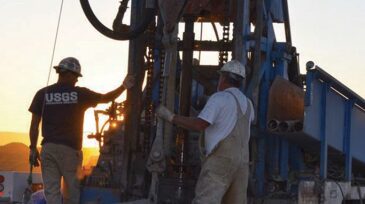
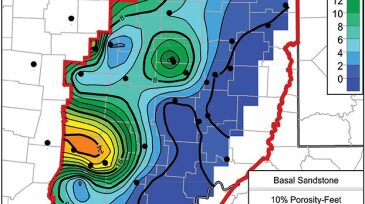
 The list of the biggest gas plays in the US is being revised as the US Geological Survey creates new estimates based on additional drilling results and available rock samples. New at Number 2 is the Mancos Shale on the Western Slope of the Rockies with 66 Tcf in recoverable reserves.
 -
Research and development firm Battelle is working on a new induced-seismicity study that aims to help wastewater disposal well operators in Ohio stay on the good side of state regulators.
-
Coalbed methane development can require a large volume of wells, but the costs of logging can be prohibitive, so alternate formation-evaluation solutions are being evaluated. This paper compares state-of-the-art mining logging technology with conventional oil-and-gas approaches.
-
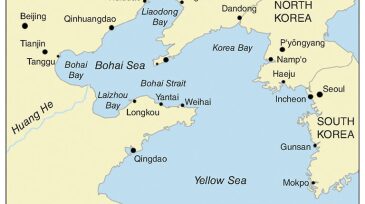
A new multilayer boundary‑detection service has been introduced to resolve the geological uncertainty associated with horizontal wells in Bohai Bay. Geosteering and real time reservoir characterization were used to reduce the uncertainty.
-
Saturation-height functions (SHFs) play a key role in reservoir description and in quantifying oil in place. The functions must compare well with other sources of water saturation (Sw), such as core measurements and well-log interpretations. This study reconciles different sources of Sw.
-
Following years of deliberation, the European Union (EU) released a recommendation on unconventional hydrocarbons and a related communication in 2014. This paper traces the origins and development of these documents, which provide vital clues for the road ahead in European shale-gas regulation.
-
To do more with less, standardization and automation will be key. Application of techniques honed in other industries need to be evaluated as part of the path toward standardized approaches.
-
Reservoir-simulation-model inputs are numerous, and uncertainty is pervasive—before, during, and after development. With the pressure to deliver results quickly, how do we find the right balance?
-
In upstream oil and gas, cloud computing is very immature because the industry has always been challenged by storage and computational capability. However, high-performance cloud computing may create an opportunity for smaller companies lacking infrastructure for scientific applications.
-
Computational advances in reservoir simulation have made possible the simulation of thousands of reservoir cases in a practical time frame. This enables exhaustive exploration of subsurface uncertainty and development/depletion options.