Reservoir

A report commissioned by Havtil, the Norwegian Ocean Industry Authority, calls for better dialogue regarding pore-pressure uncertainty and higher-end drilling techniques like managed pressure drilling as methods to reduce the risk of well-control events.
The events will be co-located 3–5 May 2027 at Reliant Park in Houston, Texas.

This case study describes how edge computing and industrial internet of things platforms were deployed to automate and optimize production operations across four distinct basins.
-
 The Bakken’s ultratight, largely oil-wet nature limits the potential of waterflooding. As an alternative, an optimally spaced well-to-well surfactant-flooding technology is proposed.
 -
Limited design capability, few number of field tests, and lack of monitoring and control were the reasons most EOR projects did not perform in the past. All those are history now.
-
This study provides technical analysis of the viability of enhanced-oil-recovery (EOR) processes; the results indicate the potential for significant improvement in recovery efficiency over continued waterflooding.
-
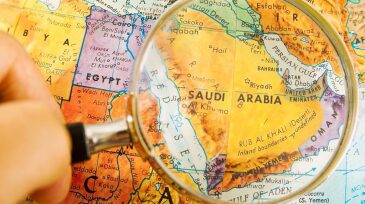
With the world’s fifth-largest estimated shale gas reserves, there is great potential for Saudi Arabia to replicate North America’s unconventional growth.
-
A strategic objective of Saudi Aramco is exploring and developing deep and unconventional gas reservoirs, many of which are considered extremely tight.
-
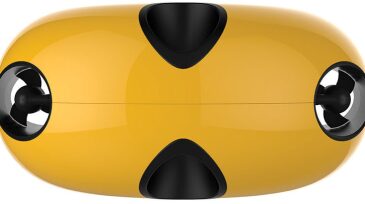
Autonomous Robotics’ first offering is built around a rounded yellow device that looks like a little flying saucer.
-
A matured field is currently producing with greater than 85% water cut (WC) and has significant levels of uncertainty with respect to oil/water contact (OWC), flank structure, depth of spill points, production allocation, and residual oil saturation.
-
Researchers at Yale University who analyzed groundwater wells in the Marcellus Shale area have determined that hydraulic fracturing is highly unlikely to be a direct source of contamination.
-
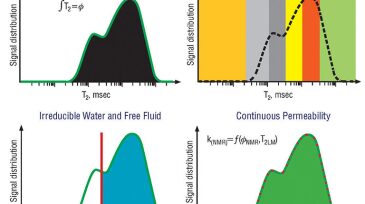
Reservoirs consisting of heterogeneous carbonates and shaly sands pose formation evaluation challenges for conventional logging-while-drilling (LWD) measurements. Magnetic resonance techniques hold promise for improving understanding of these reservoirs.
-
Rising demand for flowback technologies to reduce uncertainties is leading to the creation of more hydrocarbon and water tracers. These chemical-based tracers may play an important role in the shale industry’s effort to come up with more cost-effective fracture designs.