Reservoir

Canada’s development of large-scale digital drilling core libraries and open geoscience data platforms follows approaches pioneered in Australia, particularly Western Australia, through decades of government investment in geoscience data collection and preservation.

This paper aims to establish a set of best practices for generating particle-size-distribution data from core samples.

This paper discusses the successful execution of two openhole gravel-pack completions in two Gulf of Mexico fields with depleted reservoirs.
-
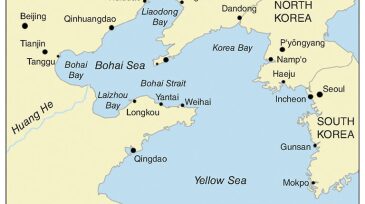
 A new multilayer boundary‑detection service has been introduced to resolve the geological uncertainty associated with horizontal wells in Bohai Bay. Geosteering and real time reservoir characterization were used to reduce the uncertainty.
 -
Saturation-height functions (SHFs) play a key role in reservoir description and in quantifying oil in place. The functions must compare well with other sources of water saturation (Sw), such as core measurements and well-log interpretations. This study reconciles different sources of Sw.
-
Following years of deliberation, the European Union (EU) released a recommendation on unconventional hydrocarbons and a related communication in 2014. This paper traces the origins and development of these documents, which provide vital clues for the road ahead in European shale-gas regulation.
-
Research and development firm Battelle is working on a new induced-seismicity study that aims to help wastewater disposal well operators in Ohio stay on the good side of state regulators.
-
The list of the biggest gas plays in the US is being revised as the US Geological Survey creates new estimates based on additional drilling results and available rock samples. New at Number 2 is the Mancos Shale on the Western Slope of the Rockies with 66 Tcf in recoverable reserves.
-
To do more with less, standardization and automation will be key. Application of techniques honed in other industries need to be evaluated as part of the path toward standardized approaches.
-
Computational advances in reservoir simulation have made possible the simulation of thousands of reservoir cases in a practical time frame. This enables exhaustive exploration of subsurface uncertainty and development/depletion options.
-
With the current changes in the industry, are we seeing the demise of unconventional developments? No, clearly not. The unconventional industry is adapting to deliver the energy demands of the future despite the low oil price.
-
This paper describes how seismic reservoir integration, advanced production analysis, and accurate nanoscale and 3D full-field simulations may address profitability issues and help oil companies to be more efficient in developing unconventional portfolios.
-
This paper presents results from the analysis of the effect of in-fill drilling on parent-well performance, and describes a simplistic approach to understanding the effect of the quest for operational efficiencies and economic cycles on development strategies.