Reservoir

Canada’s development of large-scale digital drilling core libraries and open geoscience data platforms follows approaches pioneered in Australia, particularly Western Australia, through decades of government investment in geoscience data collection and preservation.

This paper aims to establish a set of best practices for generating particle-size-distribution data from core samples.

This study explores the carbon-capture and mineralization potential of ultramafic rock powders when exposed to flue gases generated from combustion of crude oil and mesquite-derived charcoal.
-
 Reservoir-simulation-model inputs are numerous, and uncertainty is pervasive—before, during, and after development. With the pressure to deliver results quickly, how do we find the right balance?
 -
In upstream oil and gas, cloud computing is very immature because the industry has always been challenged by storage and computational capability. However, high-performance cloud computing may create an opportunity for smaller companies lacking infrastructure for scientific applications.
-
In this study, detailed petrophysical and geological field models focusing on the middle and lower members of the Bakken Formation were developed.
-
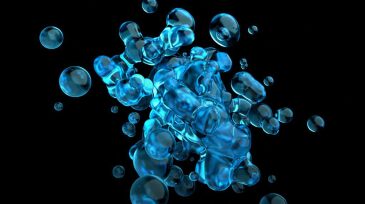
Carbon dioxide (CO2)/water foams are of interest for mobility control in CO2 enhanced oil recovery (EOR) and as energized fracture fluids or as hybrid processes that combine aspects of both processes.
-
There remain a number of challenges with CO2 EOR. These include gravity override, poor sweep efficiency, and economic factors.
-
Because the uncertainty analysis is complex and time consuming, in this paper, a stochastic representation of the computer model, called an emulator, was constructed to quantify the reduction in the parameter input space.
-
With the easy conventional oil in Argentina having been produced, one remaining way to find new oil in existing fields is to convert fields from primary or secondary production to secondary or tertiary production, respectively.
-
Part of what makes DME an intriguing EOR technology is that it is soluble in both water and oil—with a preference for the latter. Shell’s plan is to add DME to the waterflooding stream to reach a concentration of about 16%, the upper limit of its dissolvability.
-
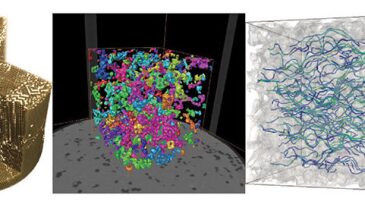
In an effort to foster collaboration in an area where there is currently very little, researchers at the University of Texas at Austin (UT) created a new web-based application for storing and sharing CT images of rocks.
-
The low recovery rates observed in most shale reservoirs has prompted a number of research projects to develop new enhanced oil recovery methods.