Reservoir

Sponsored
Effective data analysis depends on seeing connections that matter. Explore how Spotfire enables a more intuitive approach to understanding petroleum data.

The deal adds over 1,000 potential drilling locations and almost doubles oil production for Houston-based Magnolia.

Average output reached 13.6 million BOPD, extending a period of sustained growth that has kept the US at the forefront of global oil production.
-
 A detailed comparison of two leading software platforms demonstrates the effective application of these platforms in modeling complex reservoir dynamics and biochemical reactions in geological formations for risk assessment in underground hydrogen storage.
 -
The Midland, Texas-based operator said the deal hands it the biggest remaining target in the Midland Basin side of the Permian Basin.
-
Upgraded sour-gas injection and a new third-generation processing plant are key to keeping supergiant Tengiz producing for years to come.
-
Industry leaders champion collaborative solutions as essential for overcoming fracturing limitations.
-
Three graduate students have received the 2025 SPE Hydraulic Fracturing Technology Conference and Exhibition Outstanding Graduate Student Award.
-
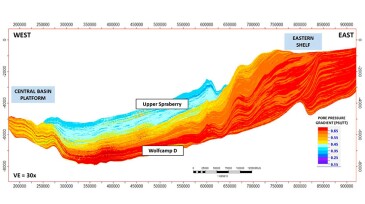
Regional pore-pressure variations in the Leonardian- and Wolfcampian-age producing strata in the Midland and Delaware basins are studied using a variety of subsurface data.
-
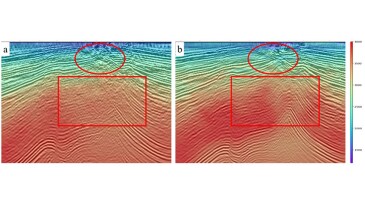
The authors of this paper present a novel joint-domain full waveform inversion framework optimizing travel-time accuracy in both data and model domains.
-
As reservoir complexity and energy-transition demands grow, the industry is developing new logging technologies, integrating multidisciplinary functions, and conducting new experiments to address new challenges. This Technology Focus highlights three papers from conventional, unconventional, and carbon-storage projects.
-
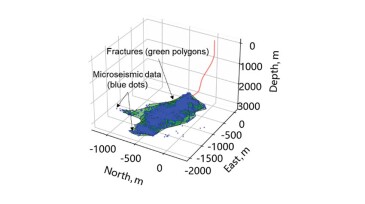
In this paper, an energy-based 3D fracture-reconstruction method is proposed to derive the complex fracture network from microseismic data in a shale gas reservoir.
-
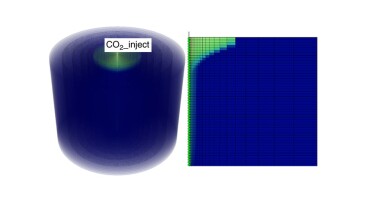
The study uses laboratory and digital core analyses of Berea sandstone to estimate petrophysical and dynamic properties for adjustment of predicted precipitation and flow reduction in reservoir simulation models of intermittent CO₂ injection with aquifer drive.