Reservoir

Coreflood experiments reveal that alkali significantly reduces viscosity loss in polyacrylamide flooding systems by minimizing adsorption and improving polymer stability under shear stress. The findings position viscosity retention as a key screening criterion for successful alkali-polymer enhanced-oil-recovery applications.

This SPE technical section editorial synthesizes six technical themes shaping CO2 transport and storage and interprets them through a petroleum engineering capability lens.

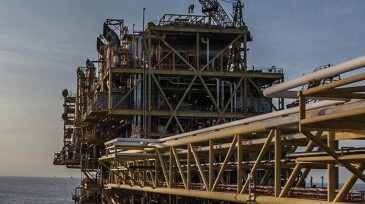
The UAE project is expected to produce up to 345 MMscf/D by 2029, with expansion potential to 1 Bcf/D.
-
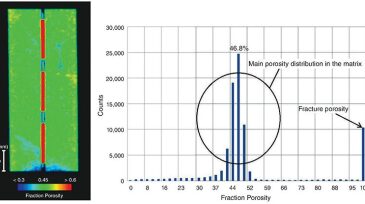
 This paper provides a more straightforward method for estimating stress-dependent permeability and capillary pressure in rock fractures.
-
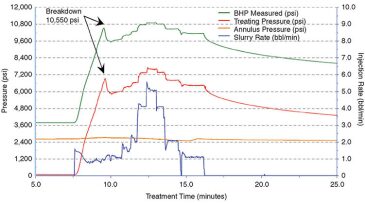
In hydraulic fracturing, the use of diagnostic-fracture-injection tests (DFITs) can provide valuable information.
-
The authors discuss the results of a pilot project to capture post-combustion CO2 for purposes of EOR.
-
Recent experience with a newly introduced sampling-while-drilling service has shown that it is possible to make reliable downhole formation-fluid-property estimates during sampling-while-drilling operations.
-
Comprehensive formation evaluation is one of the technical focus areas that is fundamental across almost all upstream businesses.
-
Produced water from chemical floods can cause problems for separation and water treatment equipment due to the polymers and surfactants used. Challenges are greater offshore where space limitations can affect treatment options.
-
This work demonstrates that molecular diffusion may be a viable oil-recovery mechanism in fractured reservoirs during injection of carbon dioxide (CO2) for enhanced oil recovery (EOR).
-
In this paper, two different EGR methods are investigated and systematically compared in terms of efficiency.
-
In this study, the authors use measured CO2/brine relative permeability data available in the literature to study the behavior of the data obtained for various rocks.
-
This paper introduces a new carbon dioxide (CO2) -hybrid fracturing-fluid design that intends to improve production from ultratight reservoirs and reduces freshwater usage.