Reservoir

Coreflood experiments reveal that alkali significantly reduces viscosity loss in polyacrylamide flooding systems by minimizing adsorption and improving polymer stability under shear stress. The findings position viscosity retention as a key screening criterion for successful alkali-polymer enhanced-oil-recovery applications.

This SPE technical section editorial synthesizes six technical themes shaping CO2 transport and storage and interprets them through a petroleum engineering capability lens.

The UAE project is expected to produce up to 345 MMscf/D by 2029, with expansion potential to 1 Bcf/D.
-
 Development and study of a new downhole bubblepoint pressure measurement technique, suitable for black oils and volatile oils, to augment downhole fluid analysis using optical spectroscopy.
-
Oil giant looks to shed Canadian tight-oil assets as it moves to wrap up merger with rival Hess.
-
At more than $140 billion, M&A market activity in the fourth quarter delivered the best showing of the year.
-
In its 2024 outlook, Enverus expects 3-mile-long lateral sections to become a new normal in the Permian and suggests the budding geothermal and lithium arenas may be the real deal.
-
Two of the most established US independents are combining to form a natural gas powerhouse that will be given a new name later this year.
-
Startup company LongPath Technologies has received conditional federal financing to install 1,000 methane detection towers spanning multiple US states.
-
Houston-based independents will combine to form a company with a production total above 500,000 BOE/D and valued at $21 billion.
-
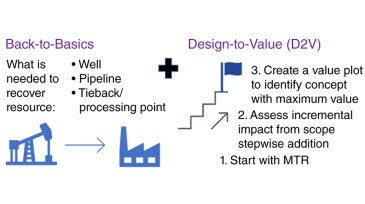
This paper describes a revamped methodology for field-development strategy formulation, particularly for marginal hydrocarbon resources, by shifting the mindset toward designing with an aim to value in order to improve project viability.
-
These papers underscore the industry’s shift toward more efficient practices, each contributing a crucial piece to the larger puzzle of EOR.
-
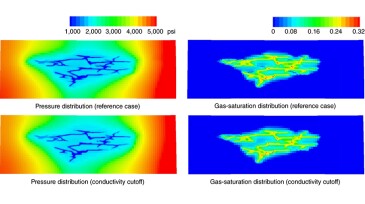
The authors of this paper present an advanced dual-porosity, dual-permeability (A-DPDK) work flow that leverages benefits of discrete fracture and DPDK modeling approaches.