Reservoir

Coreflood experiments reveal that alkali significantly reduces viscosity loss in polyacrylamide flooding systems by minimizing adsorption and improving polymer stability under shear stress. The findings position viscosity retention as a key screening criterion for successful alkali-polymer enhanced-oil-recovery applications.

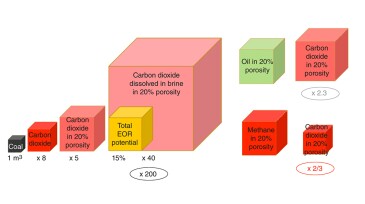
This SPE technical section editorial synthesizes six technical themes shaping CO2 transport and storage and interprets them through a petroleum engineering capability lens.

The UAE project is expected to produce up to 345 MMscf/D by 2029, with expansion potential to 1 Bcf/D.
-
 The US onshore business is looking flat at the moment, though these sorts of predictions are prone to sudden shifts.
-
SponsoredIn a partnership with the American Institute of Formation Evaluation, TGS is now the only US data vendor offering report-sourced drillstem tests, available through TGS Well Data Analytics.
-
Dos Caminos joint venture additions will be capable of delivering 2.0 Bcf/D of natural gas.
-
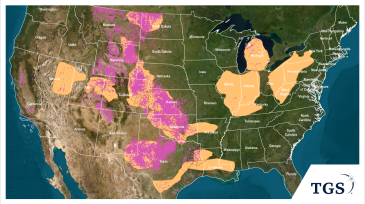
Private-equity producer adds over 160,000 acres in Wyoming’s Powder River Basin oil play.
-
As the demand for energy continues to increase, so does the sociopolitical demand that these resources be produced in a sustainable way. This reflective thought has defined this month’s selection of technical papers, each speaking to a different facet of this feature’s theme: unconventional reservoir development for a sustainable energy transition.
-
This paper describes natural fractures and their effect on hydrocarbon productivity in the Vaca Muerta shale formation.
-
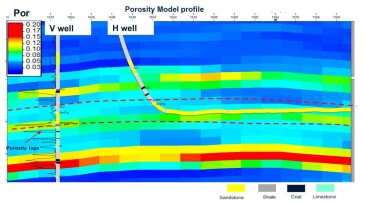
The authors of this paper describe a solution using machine-learning techniques to predict sandstone distribution and, to some extent, automate the process of optimizing well placement.
-
This study catalogs global gas/oil ratio data to identify currently produced light crude oils that could be rendered carbon neutral through the direct-air-capture mechanism.
-
A new program offers an affordable way to figure out if salt precipitation could be behind underperforming gas wells and suggests a path to higher production.
-
Artificial intelligence (AI) and machine learning (ML) technologies have rapidly progressed and have significantly affected traditional reservoir engineering, bringing innovative methodologies to reservoir simulations. However, it is essential to understand that these AI and ML technologies are only as effective and trustworthy as the data they are trained on.