Reservoir

Coreflood experiments reveal that alkali significantly reduces viscosity loss in polyacrylamide flooding systems by minimizing adsorption and improving polymer stability under shear stress. The findings position viscosity retention as a key screening criterion for successful alkali-polymer enhanced-oil-recovery applications.

This SPE technical section editorial synthesizes six technical themes shaping CO2 transport and storage and interprets them through a petroleum engineering capability lens.
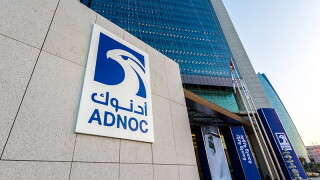
The UAE project is expected to produce up to 345 MMscf/D by 2029, with expansion potential to 1 Bcf/D.
-
 This study demonstrates how routinely acquired downhole temperature data allows for direct estimation of fluid saturations and delivers more accurate reservoir volume assessments, particularly in aquifer-supported systems.
-
SponsoredEffective data analysis depends on seeing connections that matter. Explore how Spotfire enables a more intuitive approach to understanding petroleum data.
-
The deal adds over 1,000 potential drilling locations and almost doubles oil production for Houston-based Magnolia.
-
Average output reached 13.6 million BOPD, extending a period of sustained growth that has kept the US at the forefront of global oil production.
-
A report commissioned by Havtil, the Norwegian Ocean Industry Authority, calls for better dialogue regarding pore-pressure uncertainty and higher-end drilling techniques like managed pressure drilling as methods to reduce the risk of well-control events.
-
The events will be co-located 3–5 May 2027 at Reliant Park in Houston, Texas.
-
This case study describes how edge computing and industrial internet of things platforms were deployed to automate and optimize production operations across four distinct basins.
-
Output is rising fast in the South American shale play and putting Argentina on a course to soon reach 1 million B/D.
-
This case study presents a procedure in which the operator compared production from wells with adjusted wettability to a control group, finding that the adjustments resulted in significant improvements in production and reductions in produced water.
-
Bridging the gap between foundational guidance and real-world application, SPE’s Oil and Gas Reserves Committee is advancing PRMS education with a new, peer-reviewed training initiative. This article highlights the evolution of the PRMS knowledge base and introduces the PRMS Training Master Slides—a modular, instructor-led framework designed to improve consistency, cl…