Reservoir

The UAE project is expected to produce up to 345 MMscf/D by 2029, with expansion potential to 1 Bcf/D.

This study investigates the potential for in-situ hydrogen generation from hydrocarbons using in-situ combustion, with particular emphasis on the role of kerogen content and heating mode.

This paper presents the application of degradable particulate-diverter technology to improve oil production by effectively diverting stimulation treatment fluids away from high-water-cut, high-permeability, high-temperature producing intervals or zones.
-
 The engineering and technology company announced its entire exploration and production software suite is now available on the cloud, enabling oil and gas companies to take advantage of digital technologies securely and to model and optimize production better.
-
The project aims to contribute an estimated ultimate recovery of more than 175 MMboe from one of the company’s signature deepwater projects in the US Gulf of Mexico.
-
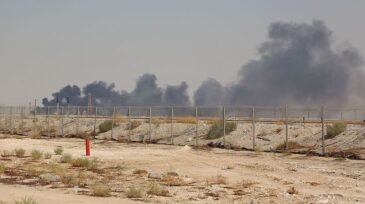
Tensions in the region spike as US blames Iran.
-
The objective of this study was to look at factors that can affect a temperature log and steps that can be taken to improve temperature-measurement accuracy.
-
This paper presents a data set involving the pumping of multiple, unique chemical tracers into a single Wolfcamp B fracture stage.
-
The complete paper describes a physics-based model of interference and a sensitivity study to propose guidelines for well spacing and a drilling timeline for multiple horizontal wells in the Vaca Muerta shale.
-
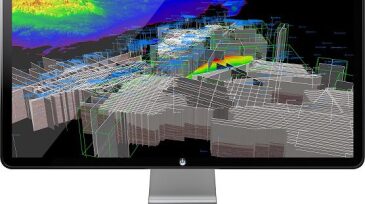
The Russian company has built a computing cluster in St. Petersburg designed to generate digital twins of oil fields. The new distributed-computing system is capable of processing more than 100 gigabits per second, speeding up the digital-modeling process five-fold.
-
A fracturing test site in West Virginia has quietly made a data trove available on the website of the Marcellus Shale Energy and Environment Lab.
-
In this paper, the authors discuss the characterization process for GR tools and how they behave in boreholes different from the one used in the University of Houston (UH) GR characterization pit.
-
This paper introduces a new core-analysis work flow for determining resistivity index (RI), formation factor (FF), and other petrophysical properties directly from an as-received (AR) set of core samples.