Reservoir

As Egypt’s largest oil and gas investor, Eni is ramping up its 2026–2027 drilling campaign with new investments cross the Mediterranean offshore, Nile Delta, Western Desert, and offshore Sinai to strengthen the country’s role as a regional gas and LNG export hub.

The industry is no longer short of measurements; the real challenge is converting them into timely reservoir decisions that protect value. That challenge is becoming more urgent as the industry depends increasingly on mature fields and existing infrastructure. The selected papers show how this need is being addressed across different producing regions.

This paper presents a case study from a mature field redevelopment project where pulsed neutron logging was integrated with advanced reservoir modeling to improve the understanding of fluid-contact dynamics and optimize new horizontal well placement.
-
 Over the past year, despite the naysayers’ comments and predictions, the usual creativity and ingenuity of engineers and scientists in the oil industry were ubiquitous.
 -
This article describes how the use of a biological EOR technique that applied produced water for reservoir flooding in a mature field led to rapid and substantial increases in oil production.
-
For engineering design teams, the market downturn is an opportunity to review practices and learn from others who have used hard times to reshape processes through simulation while cutting development time and costs.
-
Seismic innovators are working on new sound sources designed to produce better subsurface images while addressing concerns raised by scientists and regulators about the environmental impact of the related noise on sea life.
-
The authors present a method to reduce uncertainty in EOR performance adaptively while identifying an optimal operational strategy for a given tolerance to risk.
-
Conventional miscible- or near-miscible-gasflood simulation often overestimates oil recovery, mostly because it does not capture a series of physical effects tending to limit interphase compositional exchanges.
-
The Bakken’s ultratight, largely oil-wet nature limits the potential of waterflooding. As an alternative, an optimally spaced well-to-well surfactant-flooding technology is proposed.
-
Limited design capability, few number of field tests, and lack of monitoring and control were the reasons most EOR projects did not perform in the past. All those are history now.
-
This study provides technical analysis of the viability of enhanced-oil-recovery (EOR) processes; the results indicate the potential for significant improvement in recovery efficiency over continued waterflooding.
-
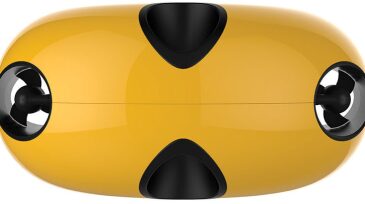
Autonomous Robotics’ first offering is built around a rounded yellow device that looks like a little flying saucer.