Reservoir

The UAE project is expected to produce up to 345 MMscf/D by 2029, with expansion potential to 1 Bcf/D.

This study investigates the potential for in-situ hydrogen generation from hydrocarbons using in-situ combustion, with particular emphasis on the role of kerogen content and heating mode.

This paper presents the application of degradable particulate-diverter technology to improve oil production by effectively diverting stimulation treatment fluids away from high-water-cut, high-permeability, high-temperature producing intervals or zones.
-
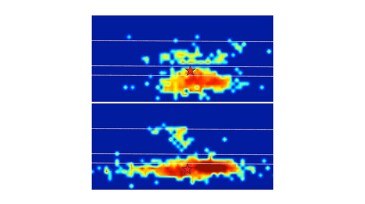
 In this work, microseismic observations are integrated with strain and other observations to investigate the microseismic response in relation to the underlying hydraulic fracture geometry for different rock types.
-
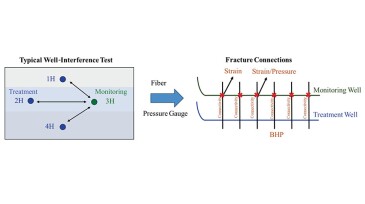
This work proposes a method to interpret far-field strain-change and pressure data to quantify fracture connectivity and properties at the cluster level.
-
This paper extends an integrated two-scale continuum model that contemplates mass, momentum, and energy changes to study the acid-stimulation process in complex carbonate acid-stimulation systems with the development of fracture and vug networks.
-
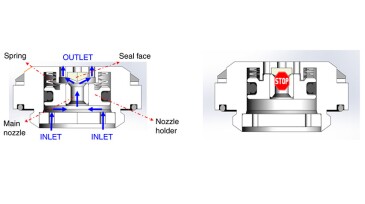
The authors of this paper write that autonomous outflow-control devices can positively affect matrix acidizing by providing the best possible conformance.
-
Three case studies consider the gas-related reasons electrical submersible pumps fail in unconventional shale environments.
-
The Texas Railroad Commission has tightened its guidelines on the permitting of disposal wells in the Permian Basin.
-
The company’s new Retina imaging system creates high-resolution borehole images at the drill bit.
-
This study combines preshear degradation, permeability, and oil presence effects to evaluate and improve polymer injectivity using acrylamido tertiary butyl sulfonate (ATBS) polymer in carbonate rock.
-
Strathcona doubles down on heavy oil—sells Montney assets for nearly CAD 3 billion, grabs Canada’s top crude-by-rail hub, and sets sights on MEG Energy in bold growth move.
-
This article presents a comparative study evaluating four machine-learning approaches, including three deep-learning methods, for forecasting gas and condensate production over a 5-year horizon.