Reservoir

The UAE project is expected to produce up to 345 MMscf/D by 2029, with expansion potential to 1 Bcf/D.

This study investigates the potential for in-situ hydrogen generation from hydrocarbons using in-situ combustion, with particular emphasis on the role of kerogen content and heating mode.

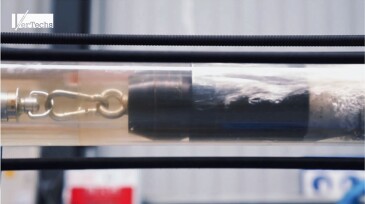
This paper presents the application of degradable particulate-diverter technology to improve oil production by effectively diverting stimulation treatment fluids away from high-water-cut, high-permeability, high-temperature producing intervals or zones.
-
 Chevron has some new ideas on how to get more oil for less cost out of shale wells in their early years.
-
Casing deformations are common in the south-west shale regions of China and the Middle East, where the widespread use of 5.5-in., 26- and 26.8-lb/ft casing is the norm. In these regions, the majority of frac plugs are designed with an outer diameter (OD) of 4.055 in. or slightly larger, which frequently encounter restrictions resulting in the loss of bottomhole assemb…
-
The authors of this paper propose an artificial-intelligence-assisted work flow that uses machine-learning techniques to identify sweet spots in carbonate reservoirs.
-
The authors of this paper describe a seismic reprocessing campaign for an Egyptian oil field that had yielded poor seismic data.
-
In this paper, the effect of cold-water injection on pressure transient analysis (PTA) of geothermal reservoirs is studied by varying the temperature of the injected cold water from room temperature to reservoir temperature.
-
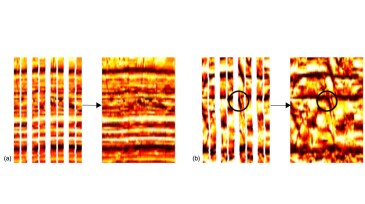
This paper describes a method with multitiered analysis to leverage machine-learning techniques to process passive seismic monitoring data, pumping and injection pressure, and rate for fracture and fault analysis.
-
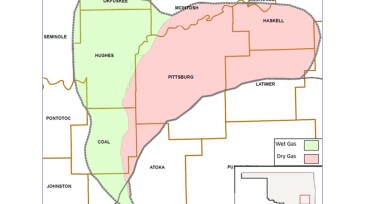
This paper describes an effort to use multiple technologies to better understand an Arkoma Basin reservoir and the interdisciplinary relationship between the reservoir’s subsurface hazards and a stimulation treatment.
-
The main objective of this paper is to investigate the relationship between strain change and pressure change under various fractured reservoir conditions to better estimate conductive fractures and pressure profiles.
-
Development and study of a new downhole bubblepoint pressure measurement technique, suitable for black oils and volatile oils, to augment downhole fluid analysis using optical spectroscopy.
-
Oil giant looks to shed Canadian tight-oil assets as it moves to wrap up merger with rival Hess.