Reservoir

As Egypt’s largest oil and gas investor, Eni is ramping up its 2026–2027 drilling campaign with new investments cross the Mediterranean offshore, Nile Delta, Western Desert, and offshore Sinai to strengthen the country’s role as a regional gas and LNG export hub.

The industry is no longer short of measurements; the real challenge is converting them into timely reservoir decisions that protect value. That challenge is becoming more urgent as the industry depends increasingly on mature fields and existing infrastructure. The selected papers show how this need is being addressed across different producing regions.

This paper presents a case study from a mature field redevelopment project where pulsed neutron logging was integrated with advanced reservoir modeling to improve the understanding of fluid-contact dynamics and optimize new horizontal well placement.
-
 The objective of this study is to conduct a comprehensive review of the latest technologies and work flows developed for heavy oil reservoir management.
 -
Researchers are building a comprehensive database of hundreds of salt domes to help expand subsurface hydrogen storage in the US.
-
The Calgary-based shale producer said the deal involves at least 600 new well locations that will keep it drilling for the next 20 years.
-
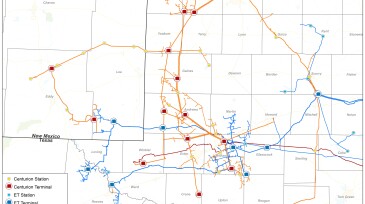
The acquisition will enable Energy Transfer to send more barrels of Permian crude to oil hub at Cushing, Oklahoma.
-
This article presents a new data-driven analysis to locate low-frequency seismic sources, referred to as near-infrasound or infrasound sources. Combining these infrasound signals with microseismicity signals allows for better characterization and monitoring of the stimulated reservoir volume.
-
The array of papers received for review this year covers a wide spectrum, both in applications and research, which indicates that the exploration and production industry is actively working to monetize high-pressure/high-temperature reservoirs.
-
The authors of this paper evaluate the effectiveness of production-enhancement activities for a long-string, gas-lifted producer using distributed-temperature-sensing technology.
-
From refracturing old wells to ones that don’t have to be fractured at all, notable producers argue that experiments are paying off.
-
The authors of this paper present results of a study that examined formation-damage mechanisms caused by drilling fluids in tight reservoirs in onshore oil fields in Abu Dhabi.
-
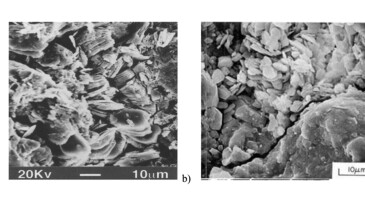
The authors of this paper present a laboratory-based model to determine the detachment of authigenic and detrital particles in formation damage.