Reservoir
The UAE project is expected to produce up to 345 MMscf/D by 2029, with expansion potential to 1 Bcf/D.

This study investigates the potential for in-situ hydrogen generation from hydrocarbons using in-situ combustion, with particular emphasis on the role of kerogen content and heating mode.

This paper presents the application of degradable particulate-diverter technology to improve oil production by effectively diverting stimulation treatment fluids away from high-water-cut, high-permeability, high-temperature producing intervals or zones.
-
 The authors of this paper describe a project that integrates carbonate stratigraphic forward models of outcropping formations and reservoir-modeling work flows.
-
SponsoredQuickly identify the right strategies for a well or pad to overcome operational challenges. Explore cost-effective, easy-to-use solutions that help operators achieve better production rates with less manpower.
-
The Oklahoma City-based tight-oil producer has agreed to acquire Validus Energy.
-
Devon, Shell, and SM Energy offer some of their latest learnings from recent independent subsurface diagnostics projects. Their work underscores why this arena of technology has become a cornerstone for hydraulic-fracture design in tight-rock reservoirs.
-
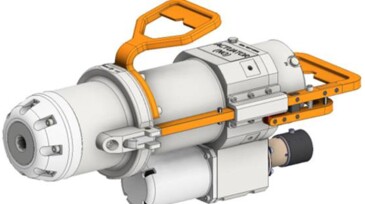
The paper describes the components of an all-electric system, how it fits within a subsea application, and how it compares with traditional electrohydraulic systems.
-
This paper presents a work flow that has been applied to crossdipole sonic data acquired in a vertical pilot well drilled in the Permian Basin.
-
This paper describes a new intelligent dosing technology to reduce liquid loading in an unconventional tight gas reservoir.
-
The paper provides insights on diffusion in organic matter to correct a primary source of underestimation of gas production in shale-gas models.
-
This paper presents a mathematical analysis of how incorrect estimates of initial reservoir pressure may affect rate-transient analysis in ultralow-permeability reservoirs.
-
As we continue to advance the capability in the laboratory environment to test downhole condition measurements experimentally, the tools we are using appear to be bridging the subsurface characterization with the production results. Continued focus on unconventionals is complemented with a renewed focus on conventional research as well.