Reservoir

This study demonstrates how routinely acquired downhole temperature data allows for direct estimation of fluid saturations and delivers more accurate reservoir volume assessments, particularly in aquifer-supported systems.

Sponsored
Effective data analysis depends on seeing connections that matter. Explore how Spotfire enables a more intuitive approach to understanding petroleum data.

The deal adds over 1,000 potential drilling locations and almost doubles oil production for Houston-based Magnolia.
-
 Does better data lead to better outcomes for one or even for all? High-quality data have become a resource in themselves, to be traded and leveraged for personal gain.
 -
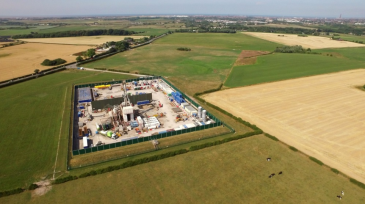
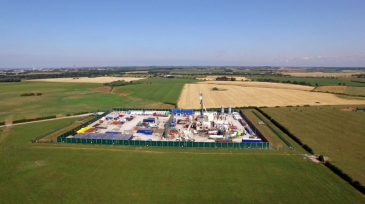
Cuadrilla has encountered its first bumps in the road while fracturing its Preston New Road shale gas well, with two quakes already temporarily halting injection operations.
-
Cuadrilla Resources will test the two wells over the next 6 months to determine how much gas it can initially recover from the Bowland Shale.
-
BP has invested more than $100 million into nine different startup companies in the past 2 years—but only one of them wants to turn your brain into a piece of its software.
-
This paper presents a new approach for more-accurate modeling of liquid blockage in tight oil and gas reservoirs and investigates the use of solvents for blockage removal.
-
This paper evaluates the ability of different groups of surfactants to improve oil recovery in unconventional liquid reservoirs (ULRs) by experimentally simulating the fracture treatment to represent surfactant imbibition in a ULR core fracture during a soaking flowback.
-
In this paper, the authors consider the development plan of shale gas or tight oil with multiple multistage fractured laterals in a large square drainage area that they call a “section” (usually 640 acres in the US).
-
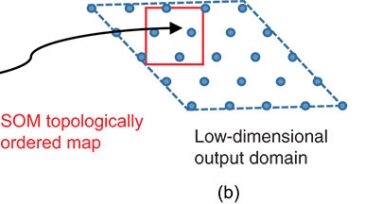
A new geostatistics modeling methodology that connects geostatistics and machine-learning methodologies, uses nonlinear topological mapping to reduce the original high-dimensional data space, and uses unsupervised-learning algorithms to bypass problems with supervised-learning algorithms.
-
Technology has been key to success in exploiting unconventional resources. In recognition of the current significant interest in this field, the upcoming issue of an SPE technical journal will feature peer-reviewed papers on the rapidly evolving suite of technologies for unconventional resources.
-
Researchers from Chevron are looking into a new approach to understand the drivers of polymer hydration. How might this affect the design of mixing systems in the field, and could it affect offshore EOR applications?