Reservoir
This study demonstrates how routinely acquired downhole temperature data allows for direct estimation of fluid saturations and delivers more accurate reservoir volume assessments, particularly in aquifer-supported systems.

Sponsored
Effective data analysis depends on seeing connections that matter. Explore how Spotfire enables a more intuitive approach to understanding petroleum data.

The deal adds over 1,000 potential drilling locations and almost doubles oil production for Houston-based Magnolia.
-
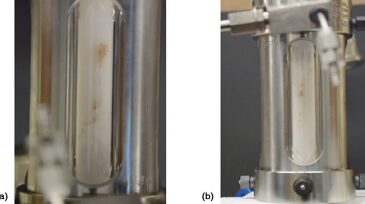
 Carbon dioxide (CO2)/water foams are of interest for mobility control in CO2 enhanced oil recovery (EOR) and as energized fracture fluids or as hybrid processes that combine aspects of both processes.
 -
There remain a number of challenges with CO2 EOR. These include gravity override, poor sweep efficiency, and economic factors.
-
This paper describes a gas-injection pilot that has been implemented in offshore Middle East carbonate reservoirs to assess injectivity, productivity, macroscopic-sweep efficiency, flow assurance, and operational efficiency in a field that has a long water-injection history.
-
The operator has initiated a cyclic-steam-stimulation project in the Opal A diatomite of the Sisquoc formation on the Careaga lease in the Orcutt oil field in Santa Barbara County, California. This paper discusses steam-injection step-rate tests (SRTs) for this asset as part of its expansion.
-
The polymer-injection project in the Dalia field, one of the main fields of Block 17 in deepwater Angola, represents a world first for both surface and subsurface aspects.
-
The Loma Alta Sur (LAS) field is a multilayer fluvial sandstone reservoir in the Neuquén basin of Argentina. Colloidal-dispersion-gel injection was considered a viable strategy to improve oil recovery in the field after early water breakthrough.
-
Since 2006, production from gas injection has outstripped that from thermal, and is continuing to grow. Even though industry conditions remain tough, EOR is expected to be increasingly important in the future, with the possibility of further uptake of it linked to the climate-change agenda.
-
The low recovery rates observed in most shale reservoirs has prompted a number of research projects to develop new enhanced oil recovery methods.
-
Part of what makes DME an intriguing EOR technology is that it is soluble in both water and oil—with a preference for the latter. Shell’s plan is to add DME to the waterflooding stream to reach a concentration of about 16%, the upper limit of its dissolvability.
-
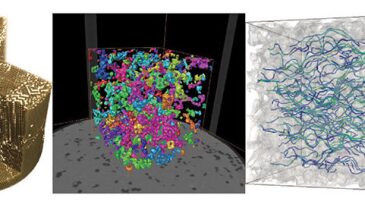
In an effort to foster collaboration in an area where there is currently very little, researchers at the University of Texas at Austin (UT) created a new web-based application for storing and sharing CT images of rocks.