Reservoir

This paper documents the testing, integration, and field deployment of a metal expandable packer used as an openhole toe isolation plug in a deepwater well under high-pressure, high-temperature conditions.

Three papers are highlighted as the primary contributions because of their broad industry relevance. They focus on improving formation particle-size characterization, expanding the application of openhole gravel packs in depleted and compartmentalized reservoirs, and advancing the understanding of capillary pressure in sand production.

This paper aims to establish a set of best practices for generating particle-size-distribution data from core samples.
-
 Partitioning interwell tracer tests (PITTs) have been used to estimate remaining oil saturations (ROSs) during waterflooding.
 -
This paper reviews the design and implementation of a full-field interwell tracer program for a giant onshore oil field in Abu Dhabi.
-
For nearly a decade, Saudi Aramco has been studying how altering the chemical makeup of seawater injected into its reservoirs can increase production. The result is "smart water" that can boost the sweep effectiveness of a waterflood.
-
Distributed temperature sensing (DTS) is the most common fiber-optic measurement used for steam-assisted-gravity-drainage reservoir monitoring.
-
In this study, the authors demonstrate a reliable, cost-effective methodology that empowers shale operators with reservoir data on every well.
-
Researchers at Heriot-Watt University in Edinburgh, Scotland, are building replica core samples using 3D printers and installing sensors inside them as they go. Their goal is to directly monitor pore-scale flow behavior from the inside of these so-called “smart rocks.”
-
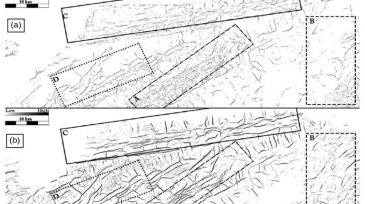
The tedium of identifying small faults in often murky seismic images pushed Dustin Dewett, an associate geophysicist for BHP Billiton, to develop a better way to use the tools at hand.
-
In this study, samples of flowback water and downhole shales are analyzed to investigate the mechanisms controlling the chemistry of flowback water.
-
To do more with less, standardization and automation will be key. Application of techniques honed in other industries need to be evaluated as part of the path toward standardized approaches.
-
The list of the biggest gas plays in the US is being revised as the US Geological Survey creates new estimates based on additional drilling results and available rock samples. New at Number 2 is the Mancos Shale on the Western Slope of the Rockies with 66 Tcf in recoverable reserves.