Reservoir

Three papers are highlighted as the primary contributions because of their broad industry relevance. They focus on improving formation particle-size characterization, expanding the application of openhole gravel packs in depleted and compartmentalized reservoirs, and advancing the understanding of capillary pressure in sand production.

This paper aims to establish a set of best practices for generating particle-size-distribution data from core samples.

This paper discusses the successful execution of two openhole gravel-pack completions in two Gulf of Mexico fields with depleted reservoirs.
-
 Researchers at Yale University who analyzed groundwater wells in the Marcellus Shale area have determined that hydraulic fracturing is highly unlikely to be a direct source of contamination.
 -
A surge in earthquakes tightly clustered in southern Kansas that followed the large increase in produced water injections prompted the state to cut the daily limits on disposal wells in that area to see if that will help solve the problem.
-
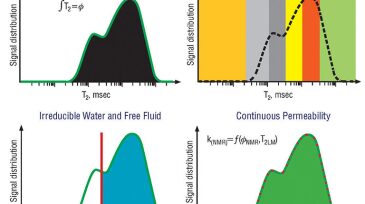
Reservoirs consisting of heterogeneous carbonates and shaly sands pose formation evaluation challenges for conventional logging-while-drilling (LWD) measurements. Magnetic resonance techniques hold promise for improving understanding of these reservoirs.
-
More than 50 years after inventing the air gun, Stephen Chelminski is working on a new version of the industry standard designed to be more in tune with the current needs of the industry and its regulators.
-
Identifying the appropriate fuel for thermal EOR projects in large Persian Gulf fields requires analysis of a variety of options, including solar, for power generation.
-
While the collapse in oil price is reshaping opinions about the North American shale revolution and the outlook for oil producers, natural gas producers in the United States are in a somewhat different position
-
Shale-gas resources were explored in Saudi Arabia by adopting a “technology-driven” approach against the US-based approach that might be termed the “factory” or “statistical” approach.
-
This paper gives the recommended MSF horizontal-well spacing for several development scenarios in Saudi Arabian gas-reservoir environments.
-
Pulled directly from the reservoir rock, core samples provide critical data used to determine how exploration should proceed. Until recently, core analysis remained old school, however, there is an ongoing transition to bring the process of core description into the digital age.
-
Although refracturing is a topic that has gained a lot of interest, many shale producers have been sitting on the sidelines because early results did not justify the spending