Risk management

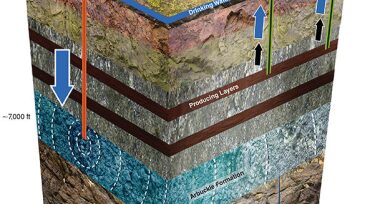
This paper presents an approach for safe, efficient, and cost-effective legacy well reabandonment.

The legacy of per- and polyfluoroalkyl substances (PFAS) is a persistent problem in many industries, including upstream oil and gas. In this Q&A, remediation expert Grant Scott presents the trouble with these “forever chemicals” and the mitigating efforts being used.

A shared digital mindset across subsurface, subsea, and drilling and wells is accelerating well planning at Vår Energi.
-
 This paper presents a multiple-physical-barrier (MPB) approach to operational risk management by focusing on physical barriers and success paths that enable each barrier to perform its safety functions.
 -
Risk-taking behavior is an important contributing human factor to incidents and is notoriously difficult to influence. This study examined how safety measures and uncertainty affected the risk-taking behavior of participants.
-
This paper explores whether factors other than the driver can be influenced to increase overall driving safety. This is an application of the risk management approach of using fundamental design and layout to reducing the likelihood and severity of incidents.
-
Industry regulators in Oklahoma have rolled out broad new restrictions on more than 600 disposal wells as part of the largest action of its kind taken in response to earthquakes.
-
Decision making in uncertain environments is key to the successful delivery of oil and gas projects. By definition, however, uncertainty is ambiguous and unpredictable.
-
Speakers at the recent SPE Asia Pacific Unconventional Resources Conference and Exhibition addressed the role of uncertainty and risk in sanctioning megaprojects.
-
Whether using internal expertise or outside consultants, projects and initiatives can go awry due to cultural issues and bad management advice. This can have implications for many aspects of a business, including process safety.
-
Analyzing accidents can demonstrate how much they have in common with everyday operations. Business principles and sound engineering practices can be at odds.
-
Change is constant in the oil and gas industry, bringing an increase in operational risk. As companies acquire and develop assets around the world, they must reduce their risk exposure by improving operational integrity.
-
The authors present a method to reduce uncertainty in EOR performance adaptively while identifying an optimal operational strategy for a given tolerance to risk.