Risk management

This paper presents an approach for safe, efficient, and cost-effective legacy well reabandonment.

The legacy of per- and polyfluoroalkyl substances (PFAS) is a persistent problem in many industries, including upstream oil and gas. In this Q&A, remediation expert Grant Scott presents the trouble with these “forever chemicals” and the mitigating efforts being used.

A shared digital mindset across subsurface, subsea, and drilling and wells is accelerating well planning at Vår Energi.
-
 If a boom in electric vehicle sales takes place, a group of auto experts suggest it would represent a larger immediate threat to electricity supply than it would to oil demand.
 -
SPE President Janeen Judah writes, "When the upturn occurs—and it will happen—are we ready to move forward with a next-generation workforce?"
-
CEO Bob Dudley, who calls BP’s UK North Sea business one of its “crown jewels”, will address hundreds of delegates at the opening plenary session at Europe’s foremost exploration and production technical conference and exhibition.
-
This paper describes how an exploration-and-production company successfully developed and applied a qualitative risk-based abandonment-prioritization strategy for an inventory of inactive subsea wells.
-
This paper presents approaches for proper risking of uncertain recoverable volumes for an unconventional resource, taking into account the chance of false positives from appraisal-well information.
-
Awareness of the different styles of thinking can provide an understanding of the choices people make when assessing risk and making decisions. The purpose of this paper is to show how such knowledge can be operationalized and applied to real-world oil and gas operations.
-
How do mooring systems reduce risks of hurricane damage to mobile offshore drilling units?
-
At NASA, the qualitative approach to risk assessment is augmented by a quantitative technique to mitigate low-probability, high-consequence outcomes.
-
Helicopter operations are important in the offshore industry but accidents involving them can have fatal consequences. This paper focuses on risk mitigation during the loading/unloading task of a slickline/wireline job from various viewpoints, including the psychological aspects of the crew.
-
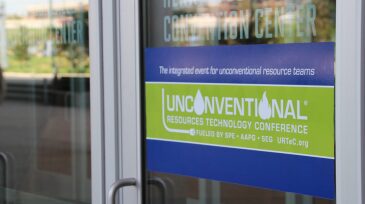
By using a Bayesian network, a probabilistic graphical model, in their shale operations, companies might eliminate some of the hurdles they face in these areas, an expert said at the 2016 Unconventional Resources Technology Conference.