Robotics/unmanned systems

Shell has demonstrated drone-in-a-box operations from its Mars floating production unit, becoming the first operator in the region to secure FAA approval for self-approved offshore beyond-visual-line-of-sight flights. JPT Senior Technology Editor Jennifer Pallanich visited Shell Technology Center Houston to see the system in action.

From AI-enabled walking rigs to subsea drones and autonomous inspection robots, robotics is rapidly moving from pilot projects to field deployment. The technology promises not only greater efficiency but also a fundamental shift in how the industry approaches safety and asset management.
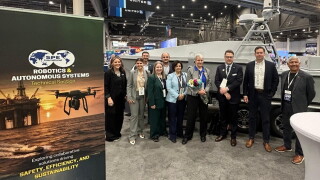
This article from the SPE Robotics and Autonomous Systems Technical Section (RASTS) explores the insights shared at the recent Offshore Technology Conference (OTC) in Houston about autonomous systems and their role in the industry's future.
-
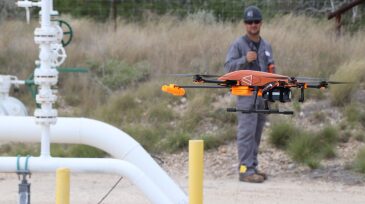
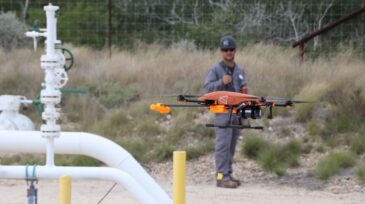
 Unmanned aerial vehicles are creeping up on ubiquity in the oil and gas industry, but their potential still firmly outweighs the actuality. A panel at the 2019 SPE Annual Technical Conference and Exhibition took a close look at the benefits of drones and at the tethers still holding back their use.
 -
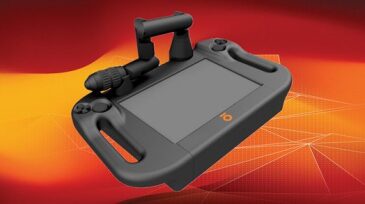
The controller from Olis will be distributed and supported by iCsys and is expected to increase efficiency and decease costs.
-
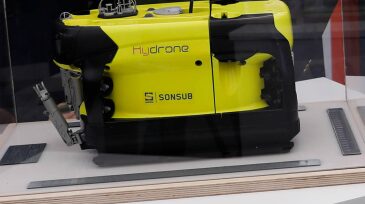
The $43-million deal with Saipem will utilize a wireless underwater intervention drone and an ROV for intervention work on the Njord field in the Norwegian North Sea. Equinor said the contract is the first ever from an operator for advanced wireless drone services.
-
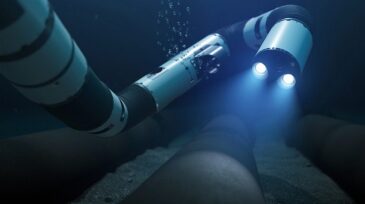
Subsea advancements in the works include longer tiebacks, an underwater drone that lives on the seafloor, and a robotic manifold capable of actuating dozens of valves. Do these new capabilities, born of necessity, signal a sea change in industrywide technology development?
-
The pilot used sensor technology originally deployed by NASA for the Mars Curiosity Rover to collect methane emissions data live-streamed from a drone. BP said it plans to deploy the technology to all of its North Sea assets, including ETAP and Glen Lyon, in 2020.
-
Equinor Technology Ventures and OGCI Climate Investments have agreed to back the tech developer, which integrates its SeekIR miniature gas sensors onto drones to detect, localize, and quantify carbon emissions.
-
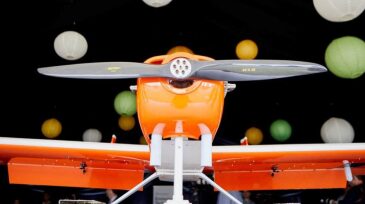
Two firms have announced new partnerships to perform unmanned-aircraft-systems-based missions for oil and gas clients in the US and abroad.
-
Drones have entered the oil and gas domain as a more comprehensive method of inspection—providing not only a flexible and cost-effective way to conduct inspections but also a data-intensive structure for inspecting assets in a nondestructive manner.
-
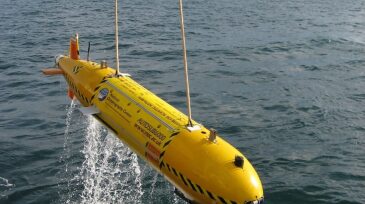
Funded by a €10.6 million grant from the European Union’s Horizon 2020 program, the ambitious project will, for the first time, undertake an oceanwide approach to understanding the factors that control the distribution, stability, and vulnerability of deep-sea ecosystems.
-
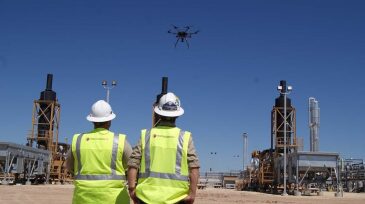
Drones are becoming an important tool for energy companies looking to improve on-site safety and operational efficiencies, and the industry is looking for the best way to maximize their value. What are some the challenges in getting these programs off the ground?