Robotics/unmanned systems

Shell has demonstrated drone-in-a-box operations from its Mars floating production unit, becoming the first operator in the region to secure FAA approval for self-approved offshore beyond-visual-line-of-sight flights. JPT Senior Technology Editor Jennifer Pallanich visited Shell Technology Center Houston to see the system in action.

From AI-enabled walking rigs to subsea drones and autonomous inspection robots, robotics is rapidly moving from pilot projects to field deployment. The technology promises not only greater efficiency but also a fundamental shift in how the industry approaches safety and asset management.
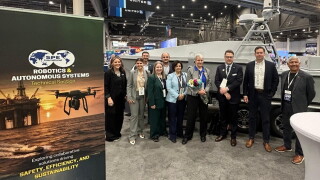
This article from the SPE Robotics and Autonomous Systems Technical Section (RASTS) explores the insights shared at the recent Offshore Technology Conference (OTC) in Houston about autonomous systems and their role in the industry's future.
-
 iHawk, Cyberhawk’s cloud-based asset visualization software, will become Shell’s next-generation visualization software platform for all onshore, offshore, and subsea assets, as well as all global construction projects.
 -
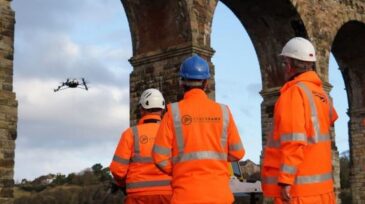
The contract continues the two companies’ 8-year working relationship; in 2012, they performed the world’s-first underdeck inspection.
-
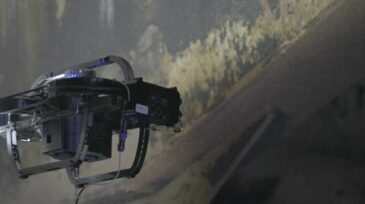
A recent test proved the feasibility of using LiDAR on remote-controlled drones to create 3D maps of the inside of tanks, increasing the safety and efficiency of inspections.
-
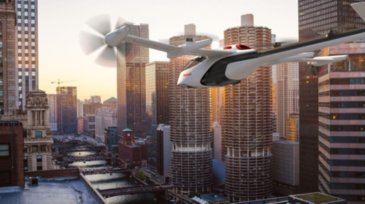
The aerospace giant is launching a new business unit to cash in on the autonomous aviation market. It will act as a systems integrator for all Honeywell products and services that could be used in this industry.
-
The Offshore Technology Conference was cancelled for the first time ever due to the COVID-19 pandemic. But the flow of ideas continues. As proof, this curated summary of technical papers highlights unique concepts that might someday reduce the offshore sector’s heavy cost burdens.
-
The testing, inspection, and certification company is reporting a 900% rise in demand for the remote inspection of offshore assets and equipment since the outbreak of the COVID-19 pandemic.
-
The A-frame is DNV certified. TechnipFMC’s ROVs will deploy in GoM later this year.
-
Rapid development of more-accurate simulator engines has given researchers the opportunity to generate sufficient data to train robotic policies for real-world deployment. However, moving from simulation to reality remains one of the greatest challenges of modern robotics.
-
Gecko Robotics is providing the energy industry with artificial-intelligence-enabled robots to inspect infrastructure and supply massive amounts of data to help predict failures before they occur.
-
Researchers with the National Center for Airborne Laser Mapping at the University of Houston are creating a set of algorithms that would allow users to more-precisely align data sets collected at different times and reliably estimate changes between images captured at different times.