Safety

The SPE Human Factors Technical Section has been officially renamed the SPE Safety Technical Section. The new name better reflects how safety is managed today across interconnected areas like human performance, risk management, and system resilience.

The company said its frequency of serious incidents was down at the end of the year from its levels at the end of 2024.

This paper examines how real-time monitoring can improve both incident prevention and emergency response in the oil and gas industry. Drawing from real-world examples and case studies, it provides practical strategies for implementing this technology effectively.
-
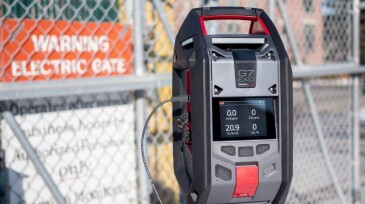
 Connected safety is growing, including in the oil patch. And it is tied to the wearable technology so prevalent today.
 -
A new funding opportunity is available for early-career researchers interested in safety and risk management issues related to offshore energy activities.
-
The two organizations recently signed a letter of cooperation. The agreement creates an opportunity to accelerate the practical application of human factors in the energy industry and create a bridge between energy industry professionals and human factors experts.
-
HiberHilo will be used to monitor remote oil and gas wells in Papua New Guinea, providing real-time performance and safety data.
-
Together in Safety’s recent report “Future Fuels Risk Assessment” uses operational scenarios across industries to evaluate the safety implications of using methanol, LNG, hydrogen, and ammonia as fuel.
-
The International Association of Oil and Gas Producers has published its annual safety report for 2021. The report shows an increase in fatalities to 20 from 14 in 2020.
-
A longer-than-expected repair period following the 8 June explosion could strand 2 Bcf/D of natural gas in the US.
-
Technology (and a tight hiring market) are eliminating surveillance in commercial trucking.
-
The Bureau of Safety and Environmental Enforcement is proposing regulations that would improve operational safety, human health, and environmental protections offshore, while providing clarity to industry regarding the bureau's review of projects proposing to use new or unusual technology, including equipment used in high-pressure/high-temperature environments.
-
KLX Energy Services was cited for exposing workers to explosion hazards.