Safety

As drilling operations become increasingly digital, computer vision is emerging as a continuous safety layer that complements, not replaces, established safety practices. The challenge is no longer whether artificial intelligence can detect hazards, but how operators should deploy, integrate, and govern these systems to improve safety without adding operational comple…

This paper explores how artificial intelligence (AI), cognitive models, and integrated digital tools can transform readiness from periodic drills into a continuous, measurable capability.

From AI-enabled walking rigs to subsea drones and autonomous inspection robots, robotics is rapidly moving from pilot projects to field deployment. The technology promises not only greater efficiency but also a fundamental shift in how the industry approaches safety and asset management.
-
 Association of Changes in Work Shifts and Shift Intensity With Change in Fatigue and Disturbed SleepThe aim of this study was to examine whether changes in work shifts and shift intensity are related to changes in difficulties falling asleep, fatigue, and sleep length.
 -
Not paying attention to strategy is expensive. Each year, organizations waste millions of dollars in time, resources, and effort
-
The 2018 Outstanding Young Professional Award was presented to BP’s Marcin Nazaruk at this year’s SPE International Conference on Health, Safety, Security, Environment, and Social Responsibility in Abu Dhabi.
-
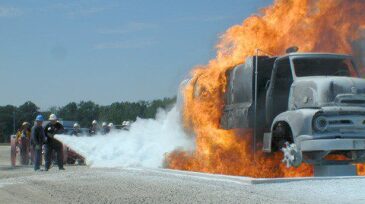
When selecting extinguishers, most organizations insist on quality, often deferring to the UL fire ratings with the expectation that higher ratings mean better firefighting capability. For some fires, that is true; however, in high-risk environments, the opposite can be true.
-
An 18-month project will develop and trial a mobile robot for autonomous operational inspection of Total facilities.
-
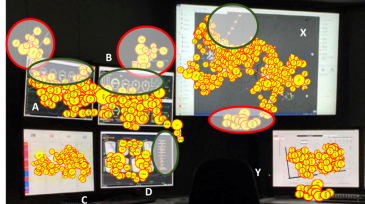
Lack of situational awareness in drilling operations has become an important safety factor. This study presents experiments conducted in a virtual-reality drilling simulator equipped with eye-tracking technology that can be used to distinguish between less and more aware/alert participants.
-
Offshore engineering and technology company Osbit won the Health Safety and Environmental Innovation Award at the 32nd SPE Aberdeen Offshore Achievement Awards for its commitment to health and safety through the design and manufacture of three intervention tension frames.
-
In an ongoing effort to increase responsible and efficient offshore energy operations, the Bureau of Safety and Environmental Enforcement has implemented a new quality-assurance process for reviewing and assessing its permitting systems.
-
At the 2018 Offshore Achievement Awards, John Fraser, Sparrows Group’s director for health, safety, environment, and quality (HSEQ) and human resources, was presented with the Above and Beyond Award.
-
On 21–22 March, The Petroleum Safety Authority Norway (PSA) held the Arctic Safety Conference. Now, the PSA has made several of the presentations available for download.