Safety

As drilling operations become increasingly digital, computer vision is emerging as a continuous safety layer that complements, not replaces, established safety practices. The challenge is no longer whether artificial intelligence can detect hazards, but how operators should deploy, integrate, and govern these systems to improve safety without adding operational comple…

This paper explores how artificial intelligence (AI), cognitive models, and integrated digital tools can transform readiness from periodic drills into a continuous, measurable capability.

This paper presents a competency-centered, data-driven approach implemented to strengthen control-room emergency-response capability through a cloud-hosted, scenario-based virtual plant simulator.
-
 This paper presents a multiple-physical-barrier (MPB) approach to operational risk management by focusing on physical barriers and success paths that enable each barrier to perform its safety functions.
 -
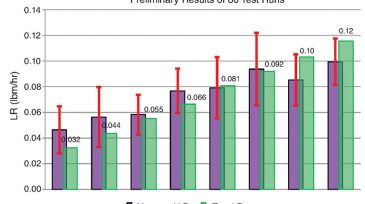
Optical gas-imaging is effective for visual identification of volatile organic compound (VOC) leaks. But it doesn't currently quantify the leak rate as required by regulations. This paper discusses work aimed at adding that quantification.
-
DNV’s new training center will run full-scale experiments for a joint industry project aimed at investigating cost-efficient explosion load descriptions for process areas.
-
When panels in an instrument equipment shelter kept tripping and the occasional smell of H2S led to an investigation of the rationale. Although a rare occurrence, this paper presents a strategy for prevention through careful site selection.
-
For the more than 7 billion people on our planet, every measure of quality of life, from gross domestic product per capita and infant mortality, to education levels and access to clean water, is correlated to the consumption of modern fuels, including oil and gas.
-
Analyzing accidents can demonstrate how much they have in common with everyday operations. Business principles and sound engineering practices can be at odds.
-
Despite a number of recent and high-profile jetliner crashes, commercial aviation has entered into a new era of safety. There is a lot the oil and gas industry can learn from their success.
-
This paper presents a technique that results in an occupied structure being located properly and constructed to reduce the risk of harm to the occupants to a tolerable level.
-
Hybridization of power systems is known to increase energy efficiency and reduce emissions, with lower fuel consumption. This paper reviews available technologies to serve as a selection guide for planning such systems.
-
Companies have developed a greater understanding of the causes and effects of long-term fatigue on workers by adapting risk-based approaches to fatigue management. But it is important to incorporate work-site causes of fatigue.