Safety

The SPE Human Factors Technical Section has been officially renamed the SPE Safety Technical Section. The new name better reflects how safety is managed today across interconnected areas like human performance, risk management, and system resilience.

The company said its frequency of serious incidents was down at the end of the year from its levels at the end of 2024.

This paper examines how real-time monitoring can improve both incident prevention and emergency response in the oil and gas industry. Drawing from real-world examples and case studies, it provides practical strategies for implementing this technology effectively.
-
 The platform, created by DrillingVR and safety group DROPS, has been designed to present online space for collaboration, meetings, and learning about dropped-object prevention.
 -
Can safety professionals leverage the spotlight on the profession to push correction and compliance?
-
In almost all organizations, incidents are analyzed and lessons learned are identified. While many hard-won performance improvements have been delivered over the long term, achieving the next level of performance will require more than just incremental improvements.
-
A recent test proved the feasibility of using LiDAR on remote-controlled drones to create 3D maps of the inside of tanks, increasing the safety and efficiency of inspections.
-
Between your current level of safety performance and excellent safety performance there is a gap. If you are going to reach excellence, you must bridge that gap. Before you can bridge it, you must identify the basic elements that create it.
-
This paper presents a tool used to control and monitor a fleet of more than 100 vehicles through road-risk analysis and geofencing on the vehicle tracking system.
-
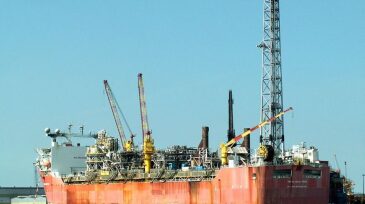
The fire at the Terra Nova FPSO comes 6 months after C-NLOPB found Suncor noncompliant with regulatory requirements and suspended operations.
-
To address key root causes, proactive initiatives such as audits, inspections, visibility tours, hazard reporting, and contractor management engagement workshops were initiated to focus on enhancing work planning, effective supervision, and risk assessment.
-
The human-factors approach in oil and gas remains an emerging science compared with other industries; most human-factors publications in the oil and gas industry focus their application on the design stage. Human-factors methods, however, can be applied at any stage.
-
The report from the International Association of Oil and Gas Producers is in relation to a person who used alcohol-based hand gel sanitizer and, after application but before the liquid had fully evaporated, touched a metal surface, where a build-up of static ignited the alcohol.